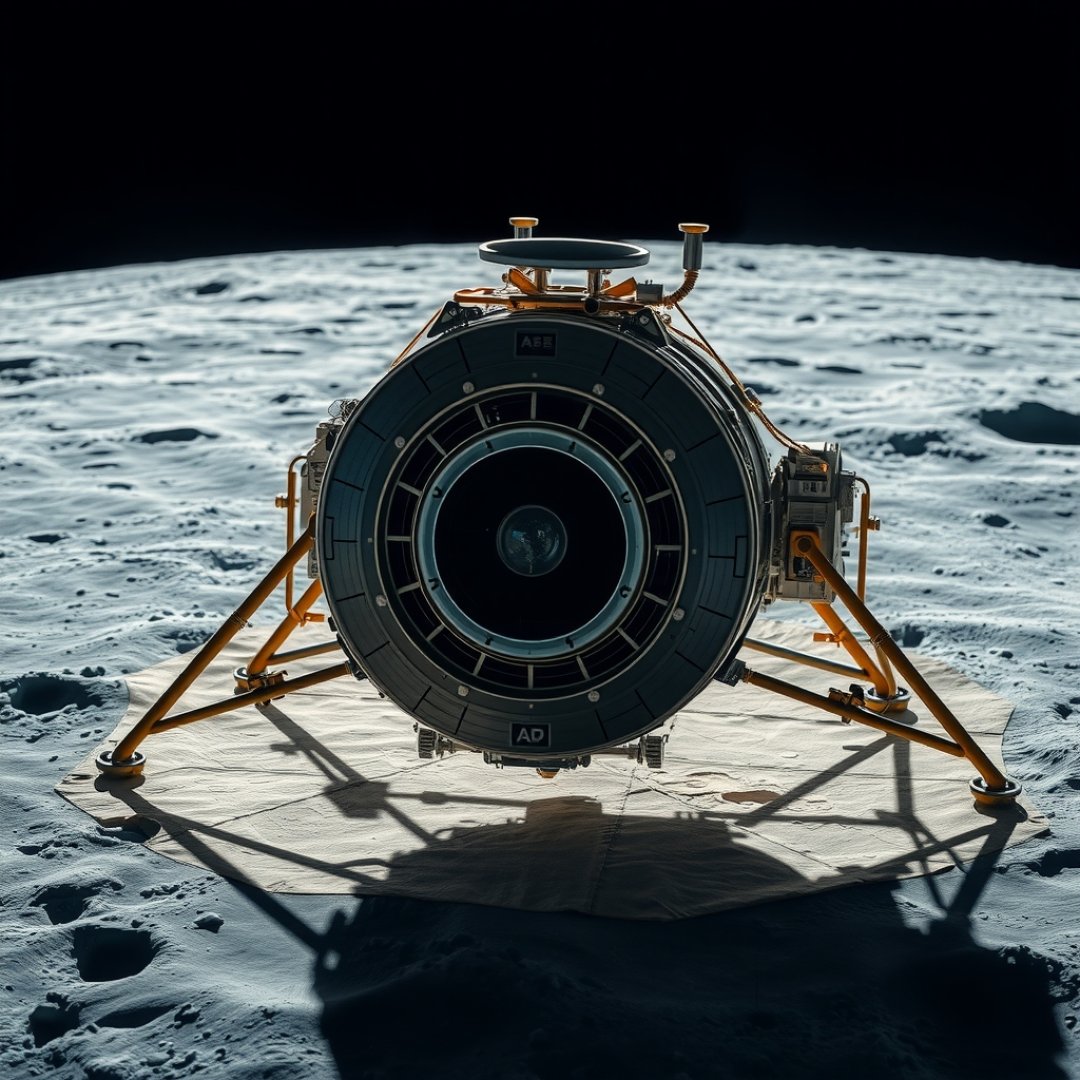
The Chang’e-7 Lunar Mission represents a pivotal milestone in international deep space exploration, focusing on the highly elusive and resource-rich environment of the Moon’s South Pole-Aitken basin. As the global scientific community looks toward establishing permanent human presence on the lunar surface, this mission serves as a critical scouting operation to understand the complex topography and chemical composition of the lunar crust. By deploying a comprehensive suite of orbiters, landers, and a hopping rover, the Chang’e-7 Lunar Mission seeks to verify the presence of water ice in permanently shadowed regions, analyze the lunar environment, and study the feasibility of using local resources for future long-term missions. This ambitious project not only underscores advancements in robotic landing technology but also promises to provide unprecedented data regarding the Moon’s evolutionary history and its potential as a gateway for deep space travel.
Targeting the Lunar South Pole
Geological Significance of the South Pole-Aitken Basin
The South Pole-Aitken basin remains one of the largest and deepest impact craters in the solar system. The Chang’e-7 Lunar Mission is uniquely designed to investigate this region, where the ancient lunar crust remains largely untouched. By studying the soil and rock samples here, scientists hope to gain insights into the early formation of the Moon and the history of asteroid impacts that shaped our satellite billions of years ago.
Identifying Volatile Deposits
A primary scientific goal involves the detection of volatile materials, specifically water ice. The existence of these volatiles in permanently shadowed regions (PSRs) is essential for future mission sustainability. The orbiter and lander payloads are specifically calibrated to map the distribution of these resources with high spatial resolution.
Technological Advancements in Exploration
Integrated Modular Payloads
To ensure mission success, the Chang’e-7 fleet incorporates a sophisticated array of sensors. These include:
- High-resolution mapping cameras for detailed topographical surveys.
- Lunar seismometers to study the internal structure of the crust.
- Magnetometers to measure the local magnetic environment.
- Advanced laser altimeters for landing site characterization.
The Hopping Rover Capability
Unlike previous wheeled rovers, the Chang’e-7 mission features a mobility platform capable of vertical maneuvering. This hopping rover is essential for exploring rugged terrain, such as steep crater walls or rocky deposits where traditional wheel-based locomotion might fail. This allows researchers to sample regions that were previously inaccessible.
Future Implications for Space Infrastructure
Resource Utilization Potential
Understanding the lunar environment is not just an exercise in pure science; it is a prerequisite for In-Situ Resource Utilization (ISRU). The data collected will help engineers determine if lunar regolith can be processed into oxygen or fuel, drastically reducing the cost of logistics for future manned missions.
Synergy with International Programs
The mission is designed to contribute to a growing body of global data. By sharing findings on the lunar environment, the Chang’e-7 mission fosters collaborative research efforts that align with other international endeavors, including the Artemis program, aiming to ensure safe and sustainable lunar habitation.
Frequently Asked Questions
What is the primary goal of the Chang’e-7 Lunar Mission?
The primary goal is to conduct comprehensive scientific investigations of the Moon’s South Pole, specifically targeting the search for water ice and analyzing the lunar environment for future exploration.
Why is the South Pole considered a significant target?
The South Pole contains permanently shadowed regions that may harbor water ice, which is a critical resource for supporting long-term human space missions.
What makes the rover in this mission different from previous ones?
The Chang’e-7 mission utilizes a ‘hopping’ rover designed to navigate difficult, rocky, and steep lunar terrain that conventional wheeled rovers cannot access.