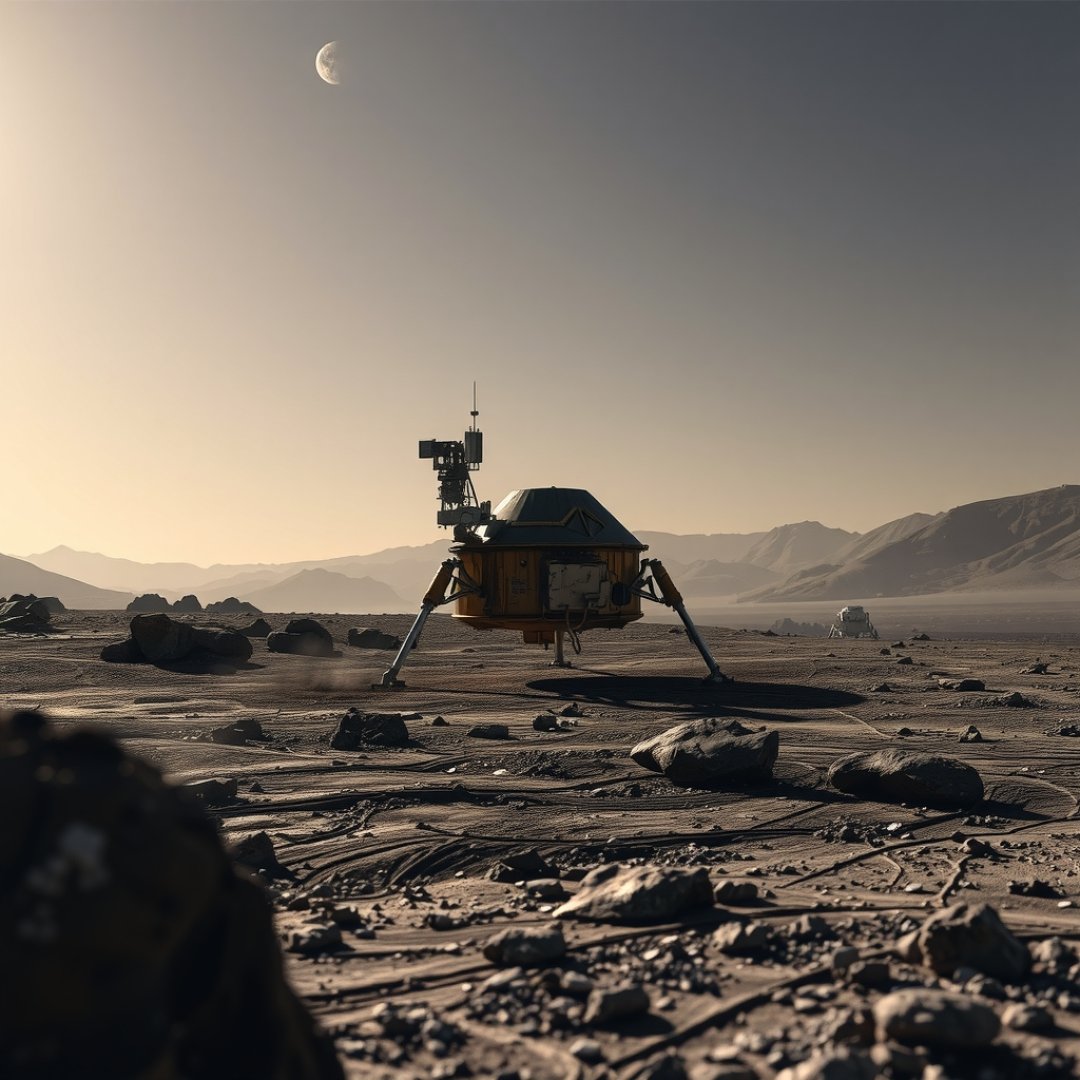
The upcoming Artemis III mission represents a pivotal moment in human space exploration, marking the first time humans will set foot on the lunar surface in over half a century. At the heart of this complex endeavor is the Lunar Lander landing, a mission-critical phase that requires unprecedented precision and coordination. By targeting the lunar south pole, NASA aims to investigate regions of permanent shadow where water ice may reside, providing essential resources for long-term space exploration. The successful execution of the Lunar Lander landing sequence is not merely about touching down; it is a fundamental prerequisite for establishing a sustainable human presence on the Moon and proving the technologies necessary for future deep-space travel to Mars and beyond. This mission serves as a sophisticated testbed for autonomous descent systems, advanced navigation, and the safety protocols required for complex extravehicular activities in a previously unexplored and geologically distinct region of our satellite.
Targeting the Lunar South Pole
Geological Significance
Unlike the equatorial regions visited during the Apollo era, the south pole presents a unique environment characterized by extreme topography and unique lighting conditions. The Lunar Lander landing targets are selected based on their proximity to ‘peaks of eternal light’ and permanently shadowed regions.
Why Water Ice Matters
- Resource Availability: Water ice is a vital raw material that can be converted into oxygen and hydrogen fuel.
- Scientific Discovery: Examining volatile compounds trapped in the cold lunar regolith offers clues about the early history of our solar system.
- Sustainability: Utilizing local resources (ISRU) is key to reducing the weight and cost of future missions.
Technical Execution of the Descent
Precision Navigation and Hazard Detection
The Lunar Lander landing requires an advanced suite of sensors to ensure a safe touchdown on terrain that has not been mapped with traditional surface rovers. The Starship HLS (Human Landing System) utilizes autonomous landing systems capable of identifying and avoiding hazards like craters, boulders, and steep slopes in real-time.
Automated Operations
The descent phase involves a complex series of engine burns to transition from orbit to a powered descent. Because of the communication lag and the complexity of the landing site, the lander must perform these maneuvers with a high degree of autonomy, relying on advanced terrain-relative navigation algorithms that compare real-time imagery with pre-loaded orbital maps.
Scientific Goals and Extravehicular Activity
Beyond the Landing
Once the landing is confirmed, the primary objectives shift to the science phase. The crew is tasked with conducting Extravehicular Activities (EVAs) to collect surface samples and deploy seismic monitoring equipment.
The Scope of Surface Research
- Conducting geophysical surveys to understand the moon’s internal structure.
- Collecting volatile samples from the regolith to test for chemical composition.
- Demonstrating new modular equipment designed for long-term habitation in extreme thermal environments.
Frequently Asked Questions
Why is the Artemis III Lunar Lander landing at the south pole?
The south pole is targeted because it contains permanently shadowed regions that are suspected to harbor water ice, a critical resource for future space travel.
What vehicle will be used for the landing?
NASA has contracted SpaceX to provide the Starship Human Landing System, which will serve as the vehicle for the Artemis III lunar descent.
How will the lander avoid craters during the descent?
The lander uses advanced terrain-relative navigation and autonomous hazard detection systems to scan the surface and select a safe landing spot in real-time.