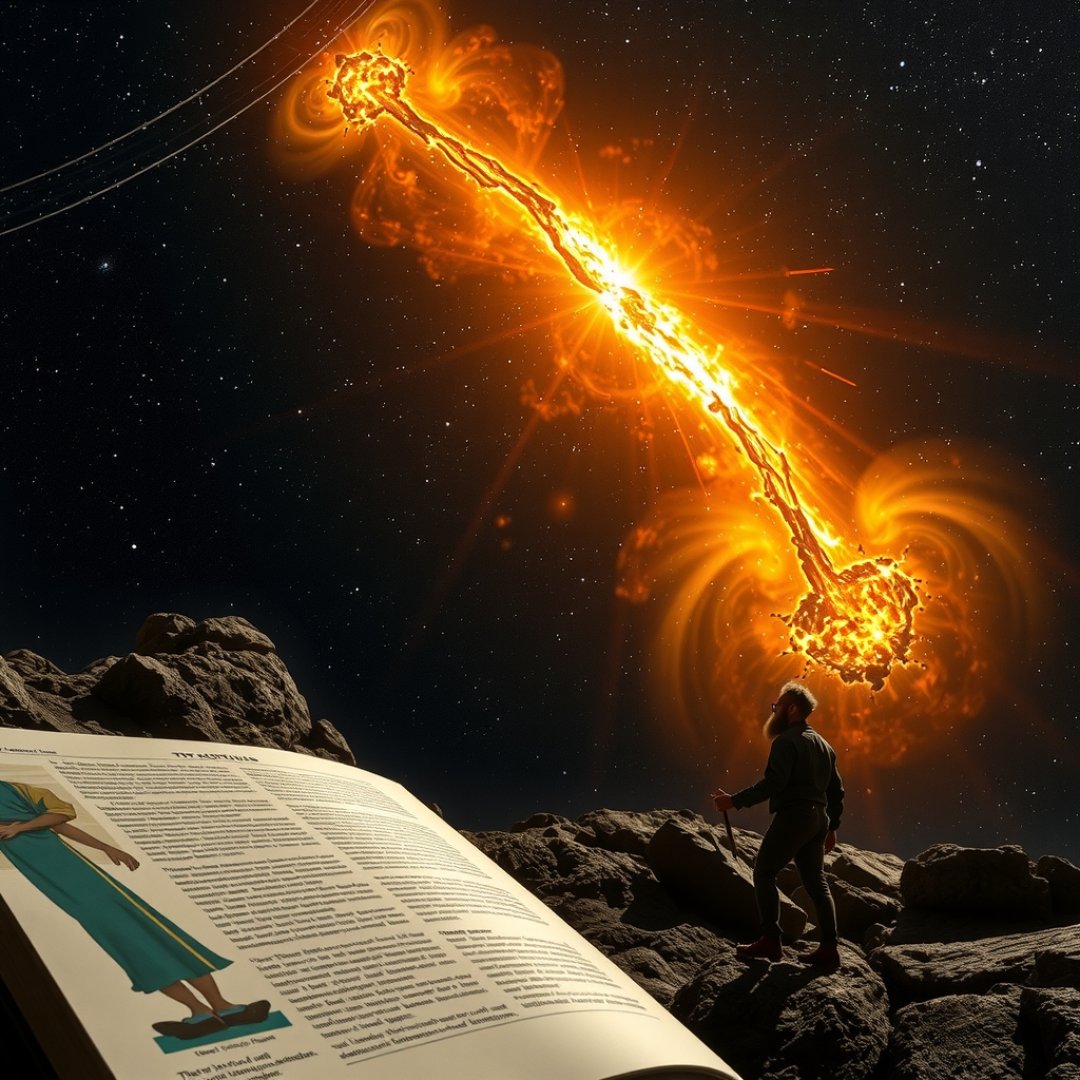
In 1572, the sudden appearance of a brilliant ‘new star’ in the constellation Cassiopeia shattered the centuries-old Aristotelian dogma that the heavens were perfect, immutable, and unchanging. Known today as the Tycho Supernova, this dramatic celestial event served as the catalyst for a paradigm shift in early modern astronomy. The Danish astronomer Tycho Brahe conducted rigorous observations of this transient object, documenting its luminosity and lack of parallax over several months. By proving that the star resided far beyond the moon, he fundamentally dismantled the geocentric view of a static celestial sphere. The Tycho Supernova remains a cornerstone in the history of science, as it provided the empirical foundation for a more dynamic and quantifiable understanding of the universe, eventually paving the way for the work of Kepler and Newton to transform our cosmic perspective.
Observational Foundations and the Death of Immutable Heavens
Challenging the Celestial Perfection
Before the arrival of the Tycho Supernova, the prevailing Aristotelian model insisted that the realm beyond the moon was perfect and immutable. Changes in the sky were considered either atmospheric or illusory. Tycho Brahe’s meticulous measurements provided the first empirical evidence that the ‘new star’ had no measurable parallax.
- It remained fixed against the backdrop of distant stars.
- It faded slowly over the course of sixteen months.
- It forced a radical reconsideration of the distance of celestial phenomena.
The Scientific Significance of SN 1572
A Milestone in Stellar Evolution
Beyond its historical context, the supernova—classified as Type Ia—represented a massive thermonuclear explosion. The Tycho Supernova remnant serves as a vital case study for astrophysicists today.
Modern Research Implications
Modern X-ray and radio observations of the remnant continue to provide data on how elements are forged in stellar explosions. By analyzing the expansion rates and chemical composition of the debris, researchers gain insights into the progenitor systems that trigger such immense energy releases, refining our current models of galactic chemical enrichment.
Legacy of the Supernova in Early Modern Astronomy
Changing the Astronomical Paradigm
The documentation of this event encouraged a move toward observational precision. Brahe’s rigorous recording of the supernova’s light curve was revolutionary. It shifted astronomy from a philosophical discipline to an observational, data-driven science.
Connecting to Later Discoveries
The impact of this discovery did not vanish when the star faded. It fostered a culture of questioning authority in science, setting the stage for the scientific revolution. Astronomers who followed, including Johannes Kepler, used the data derived from Brahe’s observations to build more accurate models of planetary motion, effectively ending the era of crystalline spheres.
Frequently Asked Questions
What is the Tycho Supernova?
The Tycho Supernova is a Type Ia supernova that occurred in the constellation Cassiopeia in 1572, famously observed and documented by the astronomer Tycho Brahe.
Why was the Tycho Supernova historically significant?
It proved that celestial objects could change, which debunked the Aristotelian theory that the heavens were perfect, unchanging, and immutable.
What kind of supernova was it?
It was a Type Ia supernova, caused by the thermonuclear destruction of a white dwarf star that had accumulated too much material from a companion star.
Can we still see the remnant of the Tycho Supernova?
Yes, although the star itself is no longer visible to the naked eye, the Tycho Supernova remnant is still detectable today using X-ray telescopes like Chandra.