
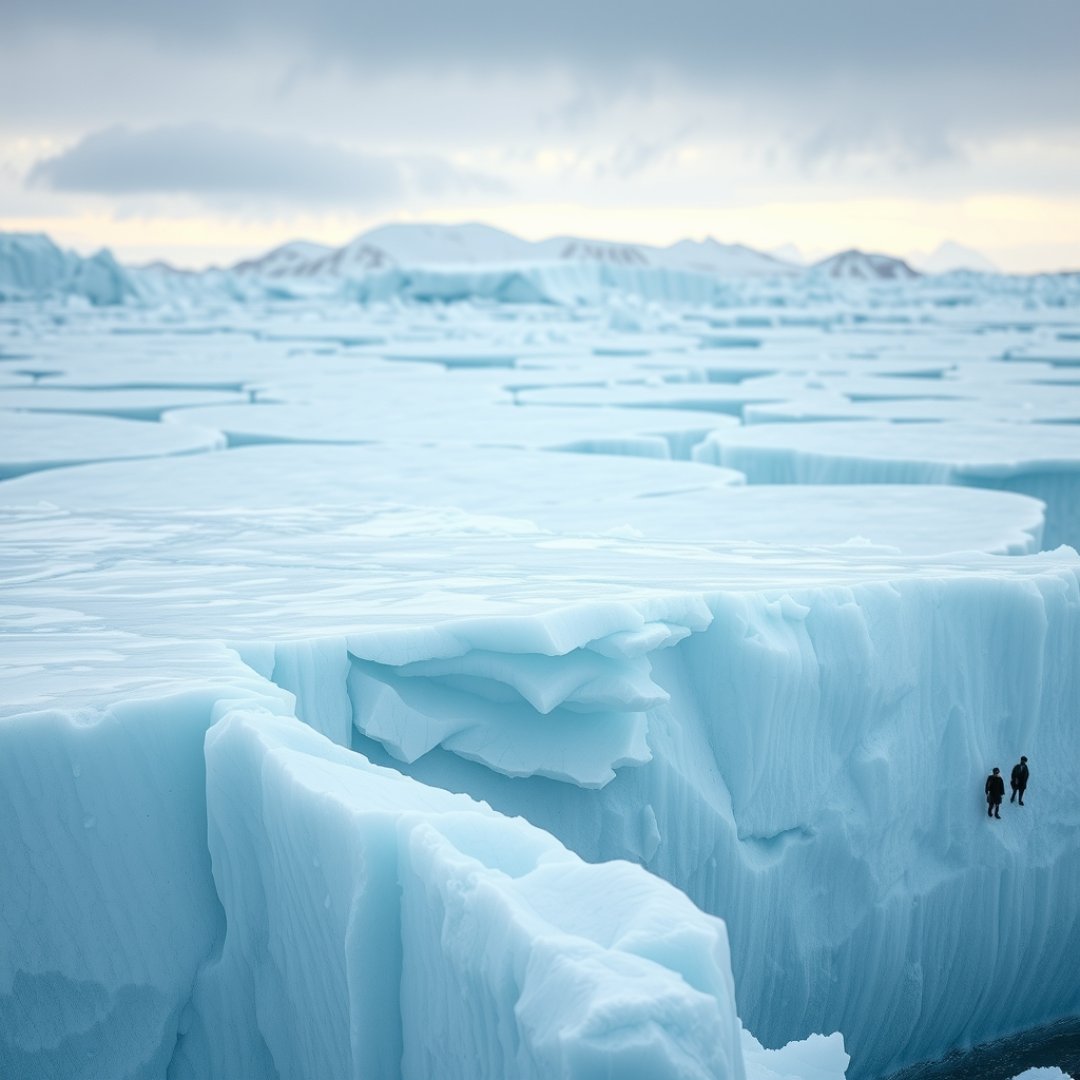
The Antarctic ice sheet serves as the planet’s largest freshwater reservoir, playing a foundational role in regulating Earth’s thermal balance. As global temperatures climb, the stability of these massive frozen expanses faces unprecedented scrutiny from the scientific community. Understanding the Antarctic ice sheet climate sensitivity is critical because even minor fluctuations in regional warming can trigger non-linear responses, leading to accelerated ice discharge into the Southern Ocean. This intricate process, driven by interactions between oceanic currents, atmospheric circulation, and ice shelf integrity, ultimately determines the trajectory of global mean sea level rise in the coming centuries. By analyzing historical proxy data and utilizing advanced satellite imagery, researchers are working to map the tipping points that could fundamentally alter our coastline geographies and climate systems.
Mechanisms of Ice Sheet Instability
The Marine Ice Sheet Instability Hypothesis
A primary concern for glaciologists is the Marine Ice Sheet Instability (MISI). Many sections of the Antarctic bedrock sit below sea level, sloping downwards toward the interior of the continent. When warm ocean water erodes the grounding line, the ice sheet can lose stability, leading to an irreversible, self-sustaining retreat.
The Role of Ice Shelf Buttressing
Floating ice shelves act as a physical barrier that slows the flow of inland glaciers. When these shelves thin or collapse due to rising sea temperatures, they lose their buttressing effect. This results in the following consequences:
- Increased discharge velocity of land-based glaciers.
- Higher rates of mass loss from the continental interior.
- Enhanced vulnerability to surface meltwater ponding.
Climate Feedbacks and Regional Warming
Atmospheric and Oceanic Interaction
The Southern Ocean absorbs a significant portion of anthropogenic heat. As wind patterns shift, this warmer water is pushed toward the continental shelf, intensifying basal melting. This feedback loop is a key metric in assessing how the Antarctic ice sheet responds to greenhouse gas concentrations.
Albedo and Energy Absorption
Snow and ice provide a high albedo, reflecting solar radiation back into space. As melt occurs, darker surfaces are exposed, which absorb more heat and accelerate local temperature increases. This reduction in reflective surface area creates a localized warming cycle that further degrades the integrity of the ice cover.
Predictive Modeling and Uncertainties
Challenges in Forecasting
Predicting the future of the Antarctic ice sheet involves complex computational simulations. Because of the vast scale and extreme environment, observational data gaps remain a hurdle for high-fidelity climate models. Current research focuses on:Integrated Satellite Gravimetry to track total mass change over time and Subglacial Mapping to understand friction between ice and bedrock.
Scientific Implications
While uncertainty persists, the consensus remains that the rate of ice loss is sensitive to global emission pathways. Every fraction of a degree in warming directly correlates to potential sea level changes, emphasizing the necessity for aggressive climate mitigation strategies to stabilize these massive polar regions.
Frequently Asked Questions
What happens if the Antarctic ice sheet melts completely?
If the entire Antarctic ice sheet were to melt, it would contain enough water to raise global sea levels by approximately 58 meters, which would drastically reshape the world’s coastlines.
Why is the West Antarctic ice sheet more vulnerable than the East?
The West Antarctic ice sheet is largely marine-based, meaning its bedrock lies below sea level and slopes inland, making it more susceptible to rapid, unstable retreat compared to the high-altitude, stable East Antarctic ice sheet.
How do scientists measure ice loss in Antarctica?
Scientists use satellite gravity measurements, specifically missions like GRACE, to track mass changes, alongside radar altimetry to measure the thinning of ice surfaces and changes in ice flow velocity.