
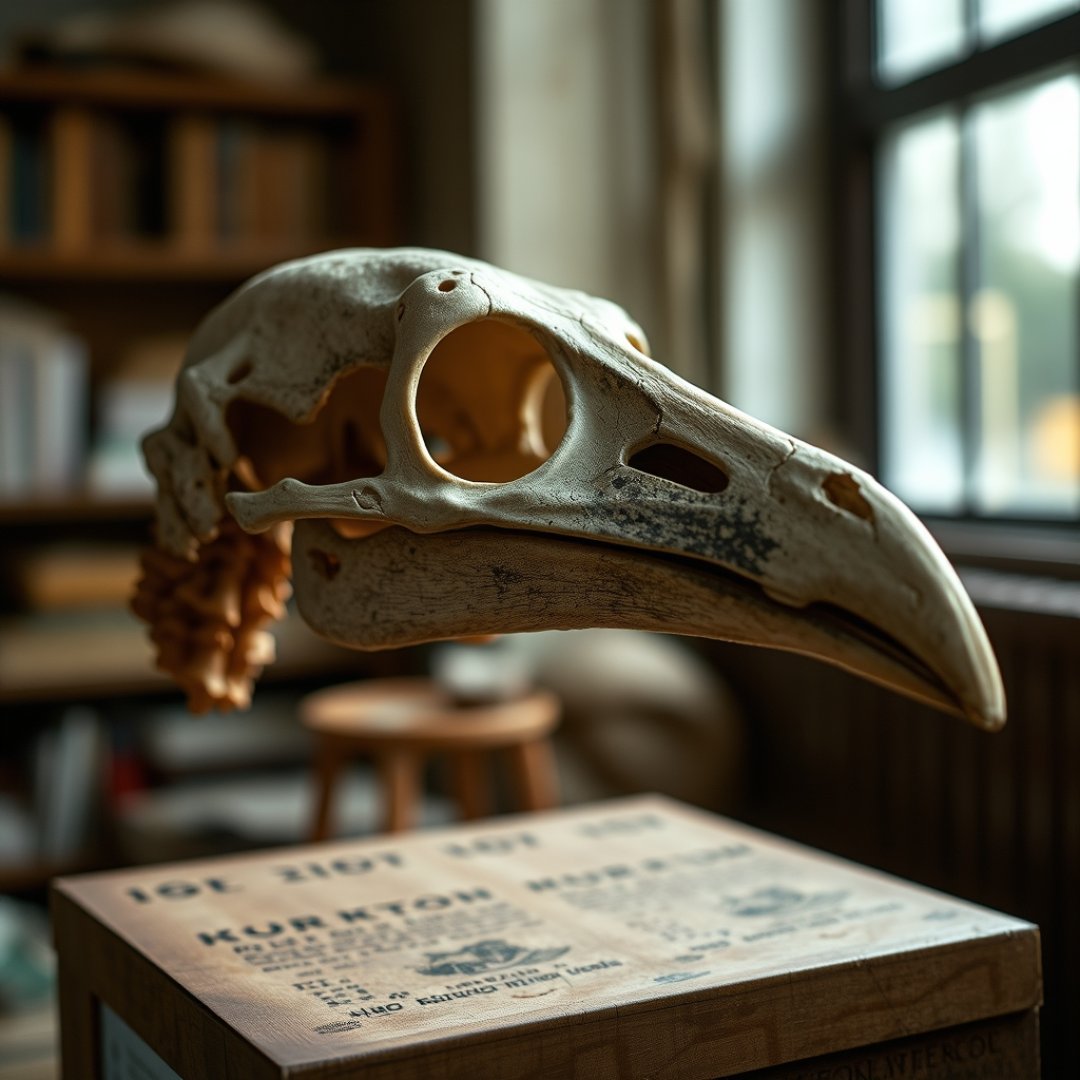
The Dodo bird skull stands as one of the most significant artifacts in the study of island evolution and avian biology. Long relegated to the realm of myth, the flightless Raphus cucullatus of Mauritius has recently undergone a scientific renaissance. By examining the structural nuances of the Dodo bird skull, researchers are uncovering profound evolutionary biology insights that redefine our understanding of how island species diverge from their continental ancestors. These skeletal remains provide a critical physical record, allowing paleontologists to map the transition from pigeon-like flyers to the specialized ground-dwelling birds that ultimately captured the human imagination. Analyzing these bones reveals not just the tragic history of a vanished species, but also the broader mechanics of natural selection and ecological adaptation in isolated environments.
Anatomical Specializations and Evolutionary Origins
Pigeon Ancestry Confirmed
Recent advancements in molecular analysis, paired with detailed 3D scans of the Dodo bird skull, have confirmed the species’ closest living relative: the Nicobar pigeon. The skull morphology exhibits unique traits that evolved rapidly after the ancestral population arrived on Mauritius.
- Beak Morphology: The massive, hooked bill suggests a specialized diet, likely composed of fallen fruits and seeds.
- Cranial Density: Observations indicate that the skull was robust, showing minimal signs of the weight reduction typically seen in birds requiring sustained flight.
- Sensory Adaptation: Measurements of the braincase suggest that the Dodo possessed a brain size relative to its body comparable to its pigeon ancestors, indicating a high level of cognitive function despite its reputation for naivety.
The Role of Micro-CT Scanning in Paleontology
Digital Reconstruction
Technological leaps have transformed how we interpret historical fossils. Traditional methods of examination risked damaging rare specimens, but modern Micro-CT scanning allows scientists to peer inside the Dodo bird skull without physical intervention. This allows for the internal mapping of sinus cavities and nerve pathways that were previously inaccessible.
By digitally reconstructing the skull, researchers can create high-fidelity models that show how the jaw musculature functioned. This provides clues about the Dodo’s bite force and feeding strategy, effectively bridging the gap between historical anecdotes and rigorous biological data.
Broader Ecological Implications of Extinction
Island Ecosystem Dynamics
Studying these remains is not merely an exercise in historical curiosity; it is a vital window into ecosystem fragility. The Dodo evolved in a predator-free environment, leading to the atrophy of defensive mechanisms found in other species. The Dodo bird skull reveals no specific cranial armaments, emphasizing their vulnerability when humans and invasive species arrived on Mauritius.
Conservation Lessons
The lessons derived from these fossils serve as a sobering baseline for modern conservation biology. By understanding the specific environmental stressors that led to the Dodo’s extinction, scientists can better model the threats currently facing vulnerable island species worldwide.
Frequently Asked Questions
What is the primary scientific value of a Dodo bird skull?
The skull provides vital data on the bird’s evolutionary divergence from pigeon ancestors and helps scientists understand how island isolation drives morphological changes.
Are there many Dodo skulls available for study?
Authentic Dodo remains are extremely rare, making every recovered specimen, particularly the skull, incredibly valuable to the global scientific community.
What does the Dodo skull tell us about its diet?
The shape and strength of the beak, along with jaw muscle attachments, suggest the bird was adapted to crush and consume hard-shelled fruits and seeds found on the forest floor of Mauritius.