
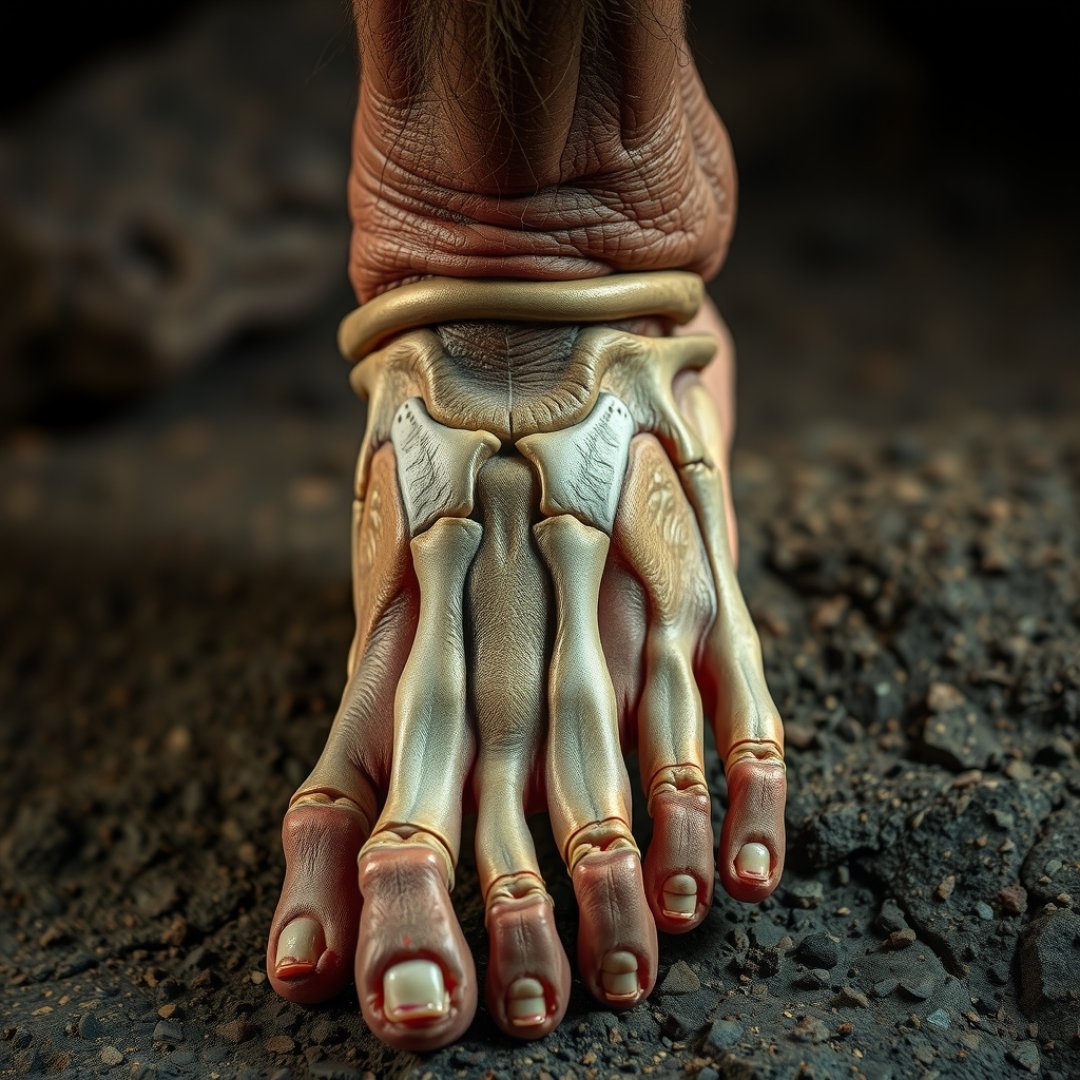
When examining the evolutionary history of archaic humans, the physical traits of our closest cousins provide critical insights into their daily survival. Recent paleoanthropological research highlights that the Neanderthal foot anatomy played a pivotal role in their ability to endure diverse and demanding environments. Unlike the more gracile foot structure seen in modern humans, the Neanderthal version displays specific biomechanical markers that suggest a high degree of structural integrity and stability adaptation. By analyzing fossilized remains, scientists have identified distinct features such as a robust heel bone and unique metatarsal arrangements that point toward a lifestyle characterized by constant physical activity on uneven terrain. Understanding these morphological differences is essential for reconstructing the locomotor patterns of these hominins and acknowledging how their physical build enabled them to thrive in the harsh climatic conditions of Pleistocene Eurasia, effectively shaping their survival strategies over thousands of years.
Biomechanics of the Robust Skeletal Structure
Adapting to Rugged Terrain
The skeletal architecture of the Neanderthal foot reveals a clear specialization for high-impact activity. Analysis of the calcaneus, or heel bone, shows that it was significantly broader and more substantial than that of modern humans. This expansion provided a larger surface area for attachment points, effectively dissipating the stress associated with walking over rocky or steep landscapes.
- Increased Cortical Bone: Thicker bone walls suggest a history of mechanical loading and consistent stress.
- Broadened Phalanges: The toe bones exhibit a thickness that likely supported greater weight distribution during bipedal movement.
- Joint Articulation: The interfaces between the foot bones suggest a more rigid midfoot, which prioritizes power over the elastic energy storage found in modern human feet.
Stability Adaptation and Locomotor Efficiency
A Strategy for Energy Conservation
Neanderthal life demanded immense endurance to track prey and forage across vast territories. Their foot structure was not merely robust; it was finely tuned for stability. The alignment of the ankle joint and the orientation of the metatarsals indicate a foot designed to minimize lateral movement, thereby preventing injury on uneven ground.
By prioritizing stability adaptation, these hominins could maintain a steady pace even when carrying heavy equipment or animal carcasses. While modern humans possess an arch structure optimized for efficient distance running, the Neanderthal configuration suggests a design focused on stability during long-distance walking or trekking across unpredictable, mountainous environments.
Evolutionary Significance in Paleoanthropology
Comparing Hominin Morphologies
The study of these anatomical features offers a window into the divergence between Neanderthals and Homo sapiens. While both species evolved from common ancestors, the specific selection pressures in Europe and Western Asia favored a more durable, stable foot anatomy for Neanderthals.
Key Differences Observed
- Arch Height: Neanderthals likely exhibited lower longitudinal arches compared to their modern successors.
- Weight Bearing: The distribution of force across the foot was shifted to favor stability at the expense of foot flexibility.
- Energy Expenditure: Their movement patterns suggest a focus on deliberate, controlled steps rather than the high-speed, elastic rebound seen in modern runners.
Frequently Asked Questions
How does Neanderthal foot anatomy differ from modern humans?
Neanderthal feet are characterized by more robust, thicker bones and a design that prioritizes stability on rough terrain over the flexible, spring-like arch mechanism found in modern humans.
Why was stability adaptation important for Neanderthals?
Stability adaptation was crucial because it allowed Neanderthals to move safely and efficiently across steep, uneven, and harsh glacial environments, reducing the risk of injury during daily foraging and hunting.
Did Neanderthals run as well as modern humans?
Current research suggests Neanderthal foot anatomy was better suited for trekking and walking on rugged terrain rather than the long-distance endurance running typical of anatomically modern humans.