
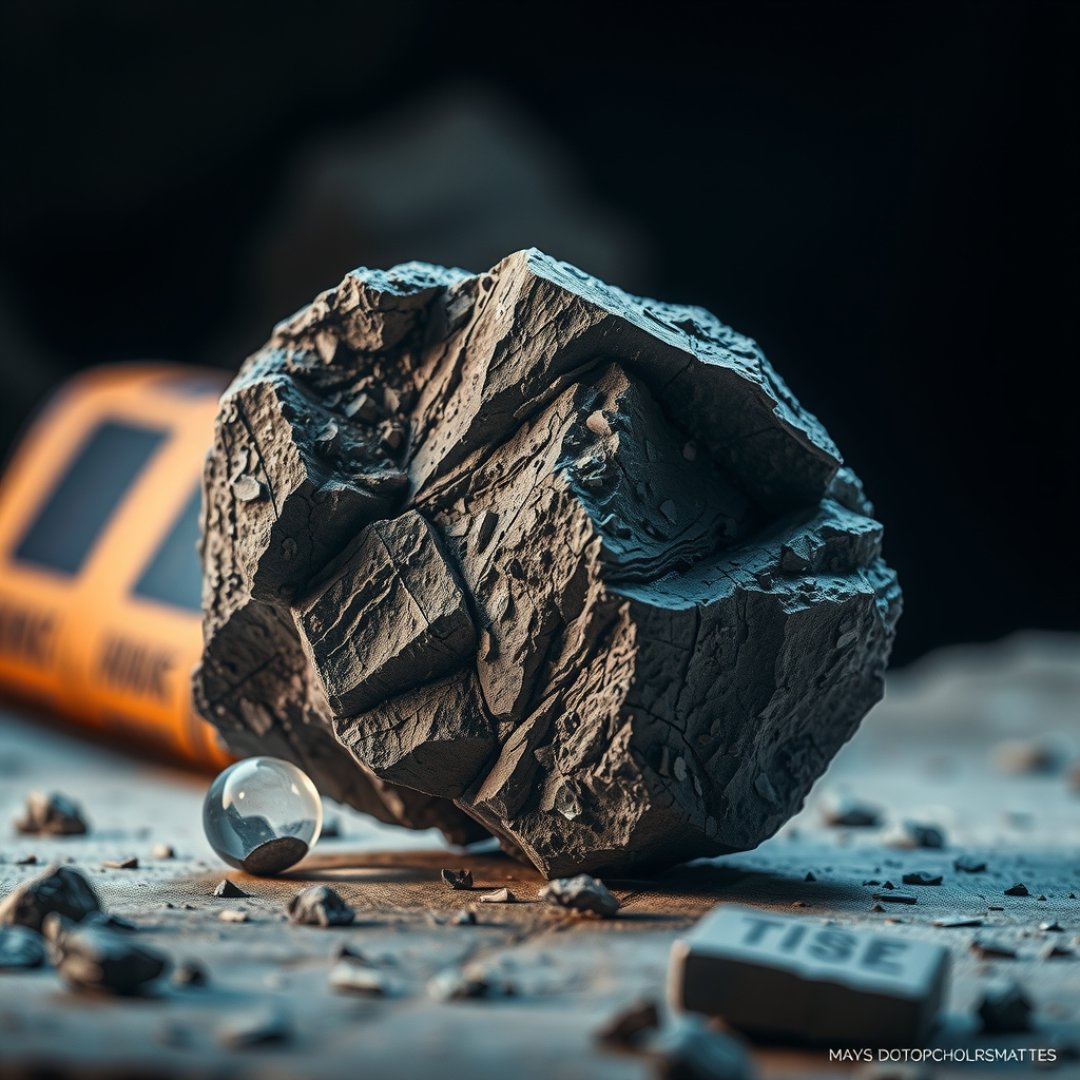
The Teghaza 001 Meteorite represents a significant focal point for planetary scientists seeking to decode the early conditions of our solar system. Found in the arid expanse of the Sahara, this specimen has undergone rigorous mineralogical origin analysis to determine its petrological history and chemical composition. By examining the crystalline structures and elemental isotopes trapped within this stony remnant, researchers have gained unprecedented insights into the thermal history of parent bodies that existed long before Earth reached its current state. Understanding the specific nature of the Teghaza 001 Meteorite is essential for mapping the chaotic delivery of materials that eventually formed terrestrial planets. This analysis not only highlights the unique characteristics of this particular fall but also serves as a broader proxy for interpreting the diverse array of chondritic materials that populate the asteroid belt. As we delve into the mineralogical layers of this object, we uncover the ancient, silent story of cosmic collision and accretion that shaped the architecture of our neighborhood in the galaxy.
Geological Composition and Mineralogy
Defining the Matrix
The mineralogical profile of this meteorite is characterized by a high degree of heterogeneity, which suggests a complex cooling history. Initial studies reveal a significant presence of olivine and pyroxene, two primary silicates that indicate a high-temperature formation environment. Electron microprobe analysis has allowed scientists to map the distribution of these minerals with precision.
- Olivine grains: Often show distinct zoning, indicating rapid cooling phases.
- Pyroxene crystals: Exhibit clear evidence of thermal metamorphism.
- Metal inclusions: Small, dispersed iron-nickel alloys hint at the redox conditions during the parent body’s formation.
Tracing the Parent Body Origin
From Asteroid to Earth
Determining exactly where this meteorite originated involves comparing its isotopic signature against known asteroid classes. The Teghaza 001 Meteorite displays oxygen isotopic ratios that align closely with specific primitive asteroid groups, suggesting it may have originated in the inner regions of the solar nebula. This data helps cosmochemists categorize the object within the broader taxonomy of space rocks.
By analyzing the shock stages visible in thin sections, researchers can also infer the intensity of the impact that liberated this fragment from its parent asteroid. These clues act as a forensic record of the violent interactions that frequently occurred during the formation epoch of our planetary system.
Significance in Planetary Science
Why This Matters
Why do we dedicate resources to analyzing a single stone found in the desert? The answer lies in the pristine nature of the material. Because the Teghaza 001 Meteorite has remained relatively unaltered since its arrival on Earth, it serves as a time capsule.
- Provides a baseline for comparing other chondritic specimens.
- Offers evidence regarding the distribution of water-bearing minerals in the early solar system.
- Refines our models of planetary accretion and the timing of solar system consolidation.
Ultimately, the study of such specimens bridges the gap between theoretical astrophysics and tangible geological data, allowing us to reconstruct the environment that fostered life on our own planet.
Frequently Asked Questions
What is the Teghaza 001 Meteorite?
It is a rare stony meteorite discovered in the Sahara desert that serves as a vital specimen for scientists studying the early mineralogical history of our solar system.
Why is mineralogical analysis important for this meteorite?
Mineralogical analysis allows researchers to determine the temperature, pressure, and cooling history of the meteorite’s parent body, providing clues about its origin.
What techniques are used to study its composition?
Scientists typically use electron microprobe analysis, mass spectrometry for isotopic dating, and thin-section petrography to examine the internal crystal structures.