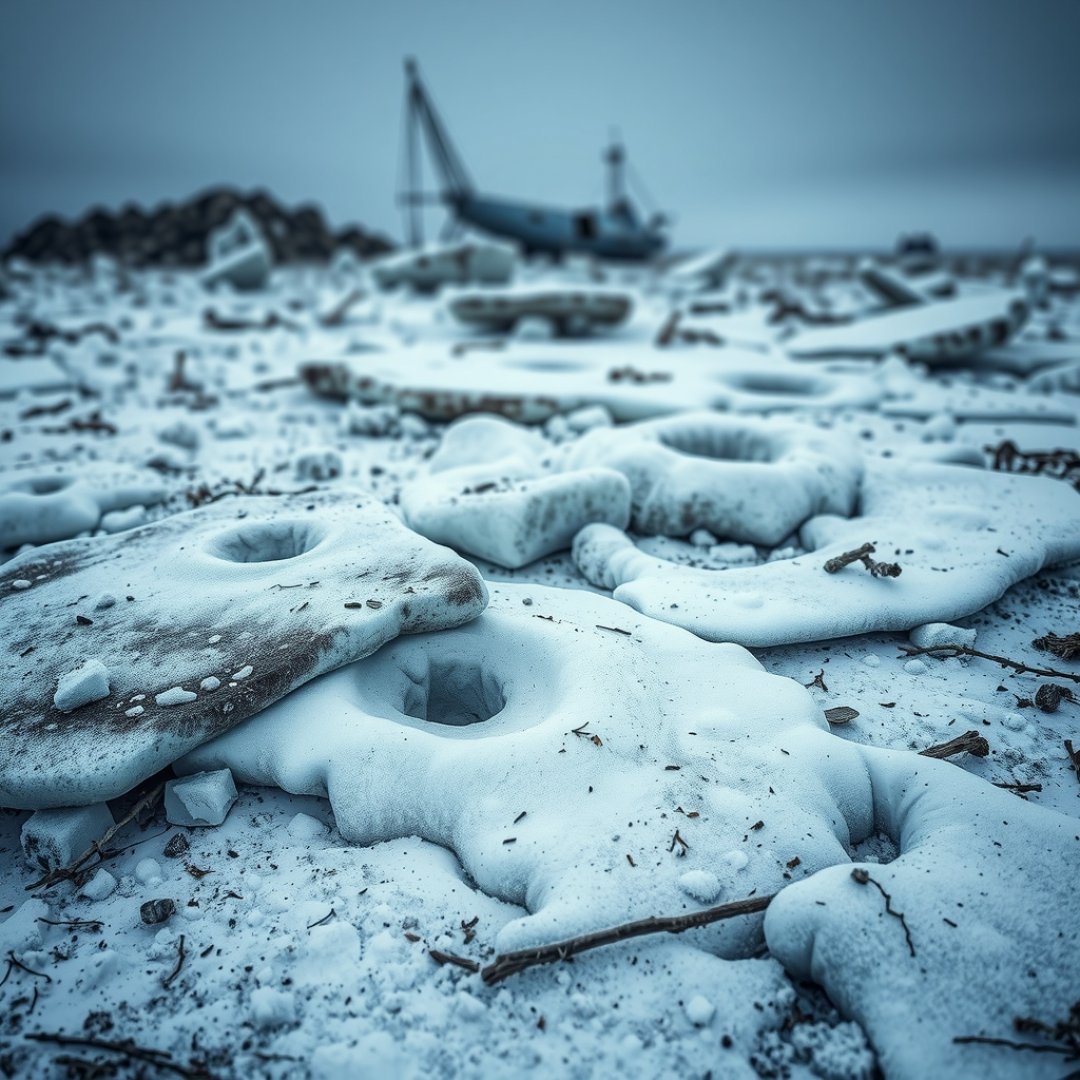
The remote landscapes of the North are undergoing a profound transformation as rising global temperatures destabilize the frozen ground that has anchored these regions for millennia. Arctic permafrost degradation is emerging as a critical environmental catalyst, fundamentally altering how rivers interact with the earth. When this subterranean ice melts, it transforms stable, frozen soil into loose, waterlogged sediment, leaving riverbanks vulnerable to the constant force of flowing water. This process is not merely a localized geological curiosity but a widespread phenomenon that is significantly accelerating river erosion across the Arctic tundra. As riverbanks collapse and channels shift, the landscape is being reshaped at an unprecedented pace, sending massive amounts of organic carbon and sediments downstream into the ocean, which triggers a cascading series of ecological and climate-related repercussions that demand urgent scientific attention.
The Geologic Mechanism of Bank Collapse
Thermal Erosion vs. Mechanical Erosion
Traditionally, rivers erode through mechanical force—the friction of water against stone and silt. However, in the Arctic, this is compounded by thermal erosion. As warmer river water thaws the permafrost-rich banks, the cohesive ice that holds the soil together disappears. This creates a feedback loop: the bank loses structural integrity, slumps into the river, and is swept away, exposing fresh, frozen soil to further heat.
The Role of Ground Ice
- Ice Wedges: These are large, vertical cracks filled with ice that act as structural weak points when they melt.
- Thaw Slumps: Massive landslide-like features that occur when subsurface ice melts rapidly during the summer.
- Sediment Delivery: As the permafrost degrades, it releases ancient silt that would otherwise remain sequestered in the deep earth.
Ecological and Environmental Consequences
Nutrient Loading and Water Quality
The acceleration of erosion is doing more than just changing the shape of the landscape. It is fundamentally altering the chemistry of Arctic watersheds. As the riverbanks erode, they deposit vast quantities of ancient, buried organic matter into the current. This nutrient loading can lead to significant changes in local water turbidity and chemistry, which impacts aquatic life, including fish populations that rely on specific spawning conditions.
The Carbon Feedback Loop
Perhaps most concerning is the release of long-sequestered carbon. Permafrost holds vast stores of organic matter. When erosion exposes this matter to the atmosphere and water, microbes break it down, releasing greenhouse gases such as methane and carbon dioxide. This process contributes to further global warming, creating a dangerous cycle that sustains and speeds up further degradation of the Arctic environment.
Scientific Monitoring and Future Projections
Why Remote Sensing Matters
Researchers are increasingly using satellite imagery to track these rapid changes. Because the Arctic is so vast and inaccessible, remote sensing allows scientists to quantify the rate of riverbank retreat over vast areas. Comparing historical aerial photographs to modern satellite data reveals that some sections of Arctic rivers are migrating laterally much faster than they were just a few decades ago.
Adaptation and Infrastructure Risks
Increased erosion also poses a tangible risk to human infrastructure. Many Arctic communities rely on rivers for transport, water, and food. As shorelines recede, essential infrastructure like docks, pipelines, and coastal structures are increasingly threatened. Understanding the mechanics of this erosion is essential for developing resilient strategies that can accommodate a rapidly shifting northern landscape.
Frequently Asked Questions
What happens when permafrost melts along a riverbank?
When permafrost melts, it loses its cohesive strength. The soil becomes saturated and unstable, making it highly susceptible to being washed away by river currents, leading to rapid bank retreat.
Why is the erosion of permafrost a climate concern?
It is a concern because it releases ancient carbon that was locked in the frozen ground. Once exposed, this organic matter decomposes and releases greenhouse gases, contributing to global warming.
How do scientists track this erosion?
Scientists use a combination of satellite remote sensing, ground-based surveys, and historical aerial photography to measure the rate of riverbank migration and terrain loss over time.