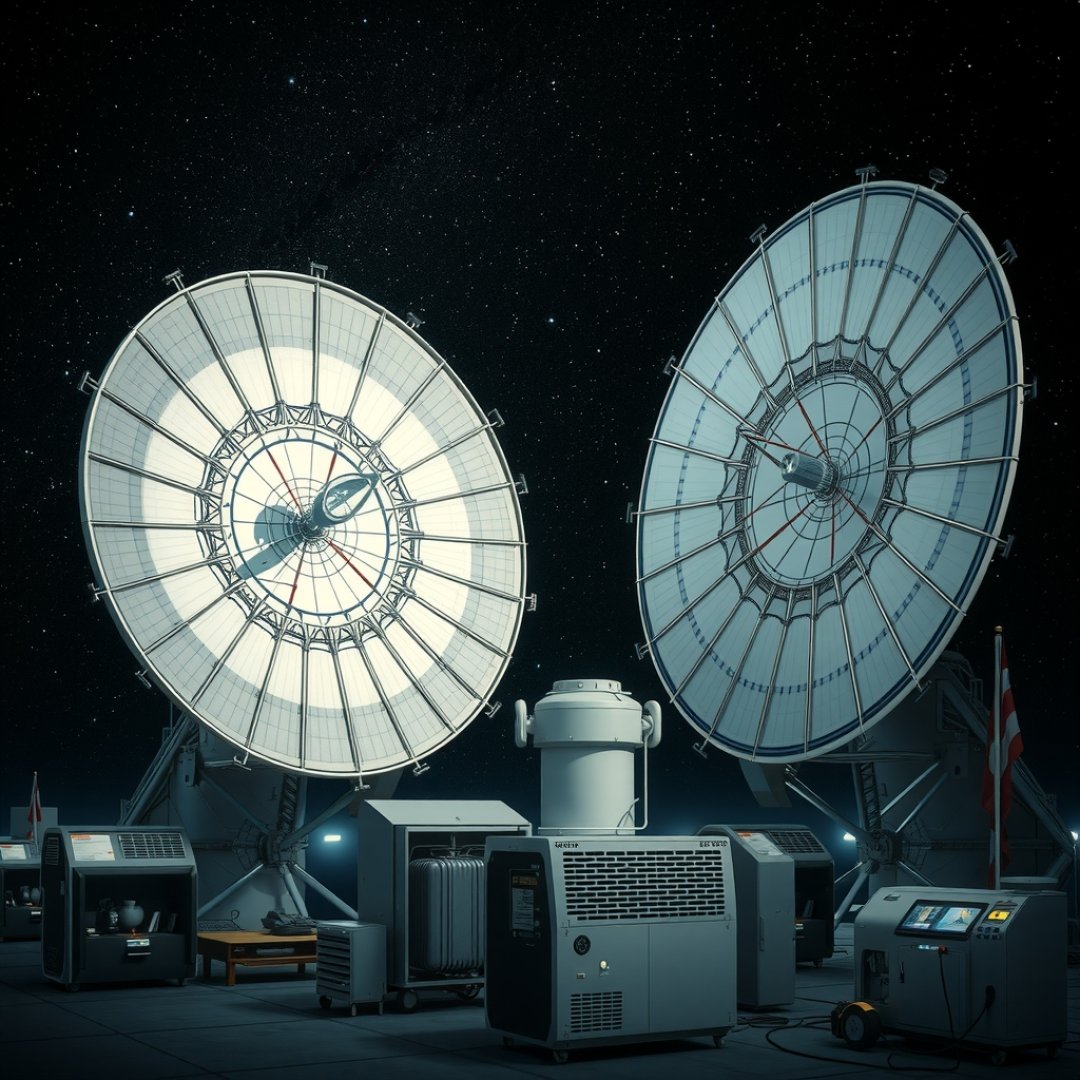
The Deep Space Network remains the backbone of humanity’s reach into the cosmos, serving as the primary bridge for radio communications between Earth and our various robotic ambassadors exploring the solar system. As mission density increases and data-heavy instruments become the standard on probes like those orbiting Mars or journeying to the outer moons, the current architecture faces unprecedented strain. To solve this bottleneck, the Deep Space Network antenna array expansion project is underway. This massive infrastructure initiative aims to modernize existing ground stations, integrate more sensitive receivers, and synchronize multiple antennas to act as a single, high-gain aperture. By boosting our uplink and downlink capabilities, this expansion ensures that scientists can continue to receive high-definition imagery, complex telemetry, and critical navigation data from the most distant regions of our celestial neighborhood.
The Necessity of Increased Aperture
Why Traditional Antennas Need Upgrades
For decades, individual massive parabolic dishes have handled the workload of deep space communication. However, as we venture further and demand higher data rates, a single dish eventually hits a physical limit in terms of signal-to-noise ratio. Arraying techniques allow NASA to combine the signals from several smaller antennas, effectively creating a virtual giant. This method provides the required sensitivity to pick up faint whispers from spacecraft traveling at the edge of the solar system.
- Increased bandwidth for high-resolution scientific data.
- Enhanced reliability through redundant signal processing.
- Lower power consumption requirements for the onboard spacecraft transceivers.
Technical Challenges of Arraying
Synchronization and Precision
Implementing an antenna array is not merely about stacking dishes; it requires nanosecond-level synchronization. Signals arriving at different geographical locations must be aligned precisely to undergo constructive interference. Engineers are currently refining digital signal processing to handle these massive streams of data in real-time. This ensures that even when a spacecraft is millions of miles away, its signal is reconstructed with perfect fidelity, minimizing the risk of data packet loss during critical maneuvers like landing or orbital insertion.
Future-Proofing Interplanetary Exploration
Supporting the Next Generation of Missions
The expansion is not just about today’s orbiters; it is a prerequisite for human return missions to the Moon and eventual crewed expeditions to Mars. High-definition video links and continuous life-support telemetry require a robustness that the legacy network could not provide alone. By expanding these arrays, we are creating a reliable telecommunications mesh that can support multiple concurrent missions, allowing the network to scale alongside the growing number of private and international participants in the space economy.
Frequently Asked Questions
What is the Deep Space Network?
The Deep Space Network is an international array of giant radio antennas that supports interplanetary spacecraft missions and radio and radar astronomy observations for the exploration of the solar system and the universe.
Why is arraying multiple antennas better than one large dish?
Arraying allows engineers to combine the signals from several smaller dishes to simulate the performance of one massive antenna, which offers greater flexibility, increased sensitivity, and built-in redundancy if one dish requires maintenance.
How does this expansion support future Mars missions?
The expansion increases the available data bandwidth and transmission reliability, both of which are essential for supporting the high-speed data needs of human-led scientific experiments and real-time communication during future Mars landings.