
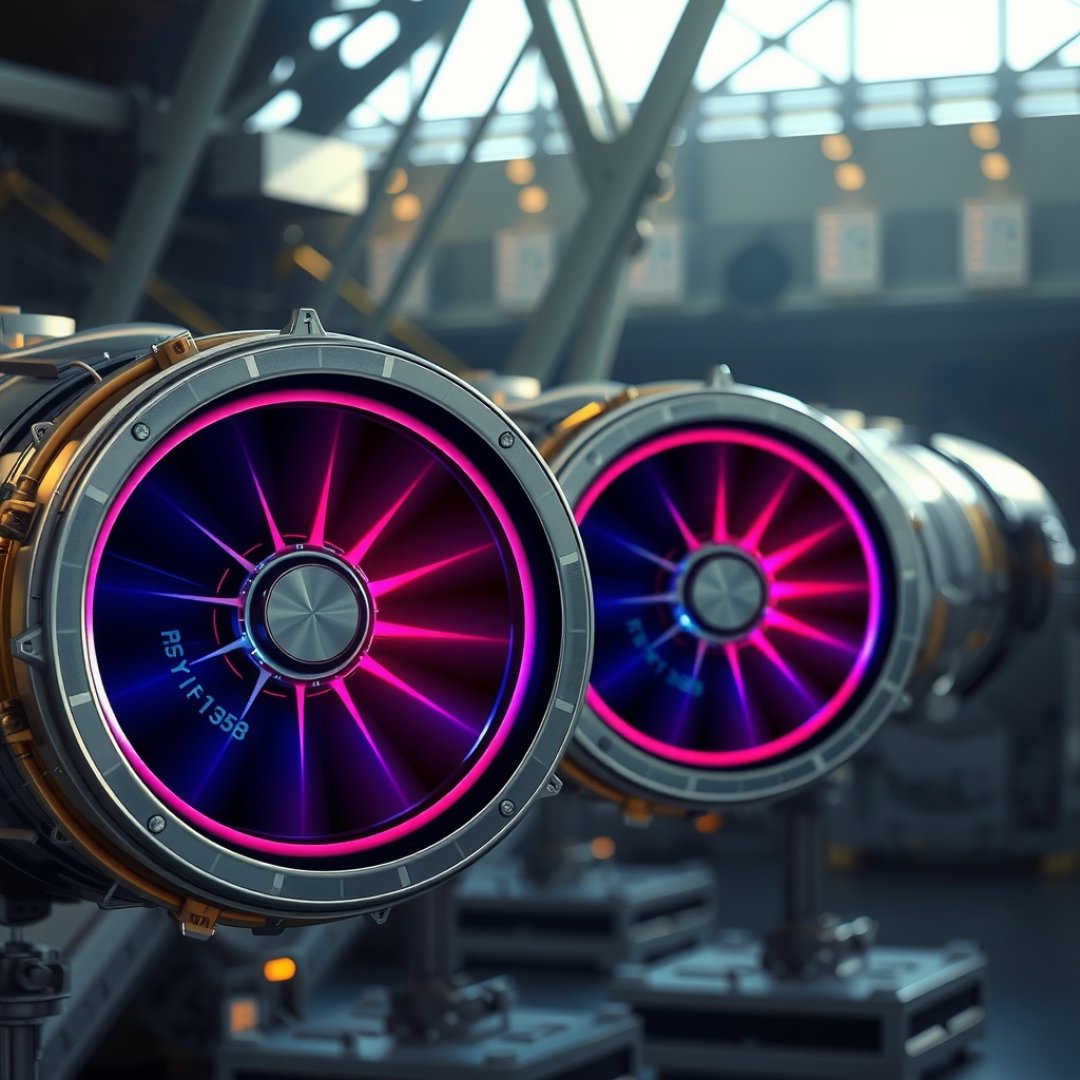
The quest for sustainable flight has led researchers to investigate groundbreaking alternatives to internal combustion, with plasma jet engines emerging as a revolutionary prospect for the next century of aviation. Unlike traditional turbine engines that rely on burning chemical fuels, these devices leverage the fundamental physics of ionized gas. By stripping electrons from air molecules, the system creates a high-energy plasma state that can be accelerated through electromagnetic fields to generate thrust. This transition from fuel-based to electricity-based propulsion could eliminate carbon emissions while potentially enabling silent, high-efficiency aircraft. Understanding the intricate mechanics behind plasma jet engines is vital for grasping how future hypersonic and commercial flight might shed its dependence on fossil energy, turning ambient air into a sustainable propellant source that pushes the boundaries of modern aeronautical engineering.
Fundamental Physics of Plasma Thrust
How Ionization Generates Momentum
At the core of the technology is the process of dielectric barrier discharge. By applying high-voltage electricity to the surrounding air, the molecules are ionized, transforming neutral gas into plasma. Electromagnetic fields then interact with these charged particles, accelerating them to high velocities. This process effectively turns the air itself into a directed force.
The Role of Electromagnetic Acceleration
- High-voltage electrode arrays act as the primary ionization source.
- Magnetic fields provide the vector force to push plasma out of the exhaust nozzle.
- Increased kinetic energy leads to high-speed exhaust flow, replicating traditional jet engine physics through electromagnetic means rather than combustion.
Advantages Over Chemical Combustion
Emission-Free Operation
Traditional jet engines require hydrocarbons, which release massive quantities of CO2 into the atmosphere. Because plasma jet engines operate on electrical power, they can be paired with renewable energy sources or nuclear-electric platforms, theoretically allowing for zero-emission long-range flight.
Acoustic and Mechanical Efficiency
Combustion engines generate immense noise due to rapid chemical explosions. In contrast, electromagnetic propulsion is far quieter and involves fewer moving parts. This reduction in mechanical complexity suggests lower maintenance requirements and significantly longer operational lifespans for aircraft airframes.
Technical Challenges to Real-World Scaling
Power Density Requirements
The primary hurdle remains the power-to-weight ratio. To achieve the thrust necessary for heavy commercial lift, a system must generate enormous amounts of electrical energy, which requires advancements in capacitor density and compact power generation. Currently, prototypes are often limited to small-scale atmospheric drones and lab-based demonstrators.
High-Voltage Safety
Managing the extreme electrical fields required for plasma generation creates significant challenges regarding insulation and interference with onboard avionics. Engineers must design robust shielding to prevent arcing and ensure the safety of passengers and sensitive flight control systems during high-altitude operations.
Frequently Asked Questions
Are plasma jet engines available for commercial flight today?
No. While the physics has been proven in laboratory settings and small drone prototypes, significant advancements in power density and energy storage are required before they can be used for commercial aviation.
Do plasma engines produce any exhaust emissions?
These engines do not burn fossil fuels, so they do not produce carbon emissions. However, the ionization process can produce trace amounts of ozone, which engineers are actively working to mitigate.
How do these engines create thrust without fuel?
They don’t use ‘fuel’ in the traditional sense, but they do require a constant stream of air. The engine uses electricity to ionize that air and then uses electromagnetic force to accelerate the ions out the back, creating Newton-compliant thrust.