
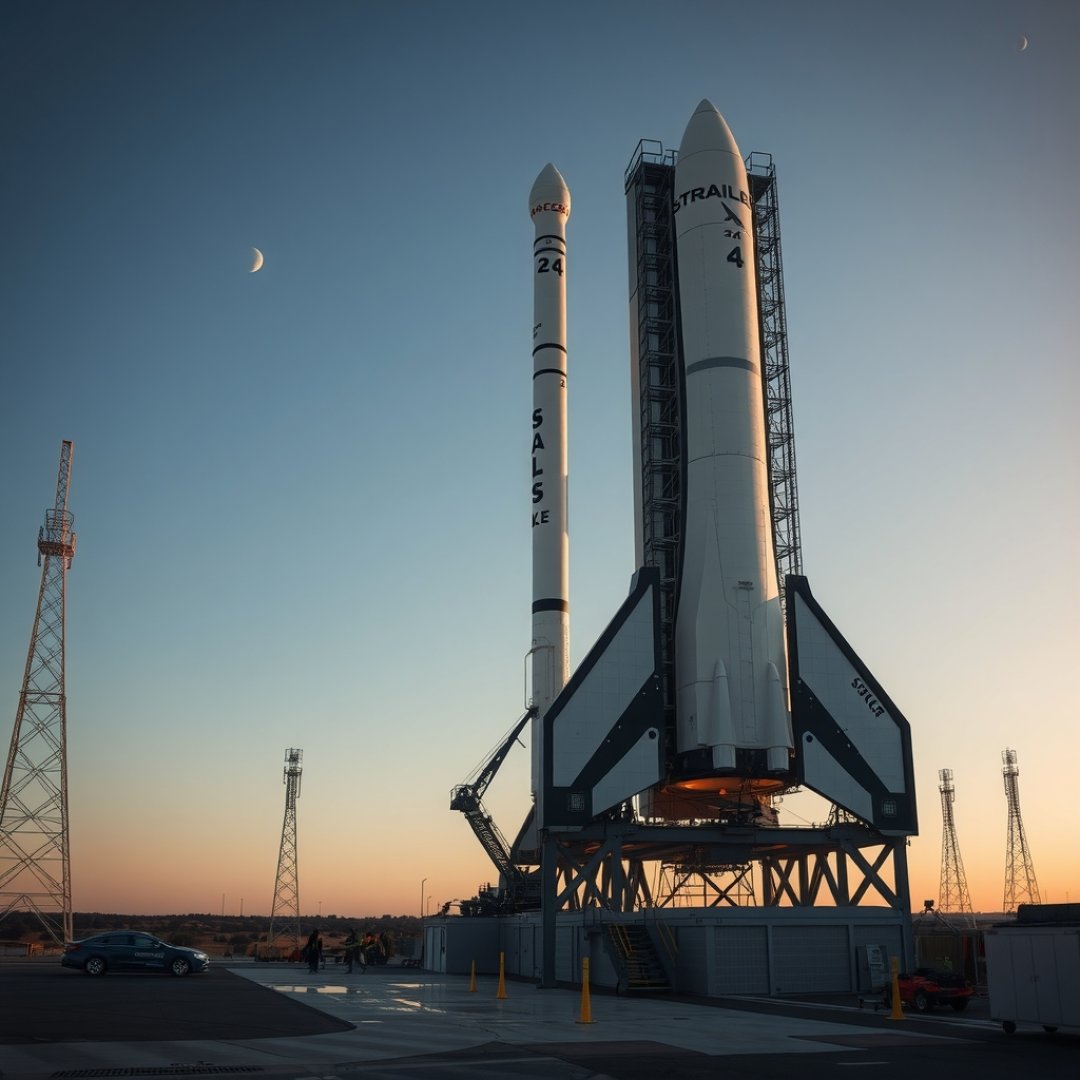
The development of the Starship launch vehicle represents a fundamental shift in how humanity approaches spaceflight and orbital missions. Designed as a fully reusable, two-stage super heavy-lift rocket, this system is engineered to carry both crew and massive cargo payloads into Earth orbit, to the Moon, and eventually toward Mars. By utilizing stainless steel construction and advanced Raptor engines powered by liquid methane and oxygen, the system achieves unprecedented levels of performance and efficiency. Understanding the Starship launch vehicle orbital flight capabilities is essential to grasping why this technology is often described as the key to making human life multi-planetary. As test flights continue to push the boundaries of altitude and velocity, the project demonstrates a robust architecture capable of rapid reuse and high-cadence launches, which are critical for lowering the economic barriers to establishing a permanent presence in space.
Technical Architecture and Propulsion
The Super Heavy Booster
The first stage, known as Super Heavy, provides the immense thrust required to lift the vehicle off the launch pad. Equipped with thirty-three Raptor engines, it utilizes a sophisticated gimbaling system to achieve necessary thrust-vector control during the initial ascent phase.
The Starship Upper Stage
The upper stage is a versatile spacecraft that handles orbital insertion, long-duration coasting, and reentry maneuvers. Key technical features include:
- Header tanks for landing propellant management.
- Thermal protection systems designed for atmospheric reentry.
- Integrated payload fairings for both satellite deployment and crewed transit.
Orbital Insertion and Reusability
Achieving Orbit
Once the Super Heavy booster separates, the Starship upper stage ignites its vacuum-optimized engines to accelerate to orbital velocity. This phase is critical for stabilizing the vehicle in its target orbit, whether that involves Low Earth Orbit (LEO) or a trans-lunar trajectory.
Revolutionary Recovery Mechanics
The defining aspect of the system’s orbital flight capabilities is its potential for full, rapid reusability. By performing a precision boost-back and landing burn, the booster can return directly to the launch site, while the upper stage maneuvers through the atmosphere to return for a controlled splashdown or eventually a catch-and-recover operation. This cycle drastically reduces the cost per kilogram of mass delivered to space.
Strategic Significance for Space Exploration
Enabling Deep Space Missions
The capability to perform orbital refueling is perhaps the most significant strategic advantage of the architecture. By launching multiple tankers to dock with a waiting craft, the vehicle can be fully refueled in orbit, enabling it to transport massive amounts of equipment and supplies to lunar or Martian surfaces.
Economic Impact on Satellite Deployment
Beyond human exploration, the platform promises to revolutionize the commercial satellite market. Its massive cargo capacity allows for the deployment of hundreds of satellites in a single launch, facilitating the growth of global internet constellations and sophisticated space-based observational networks.
Frequently Asked Questions
What is the primary goal of the Starship launch vehicle?
The primary goal is to provide a fully reusable, super heavy-lift launch system capable of transporting large payloads and humans to orbit, the Moon, and Mars, while significantly reducing the cost of space access.
How does the Starship vehicle reach orbit?
It utilizes a two-stage process where the Super Heavy booster provides the initial liftoff thrust, followed by the upper stage igniting its engines to achieve the necessary orbital velocity.
Why is orbital refueling important for this mission?
Orbital refueling allows the spacecraft to carry much larger payloads to deep space destinations, as it does not need to launch with all the fuel required for the entire mission journey.