
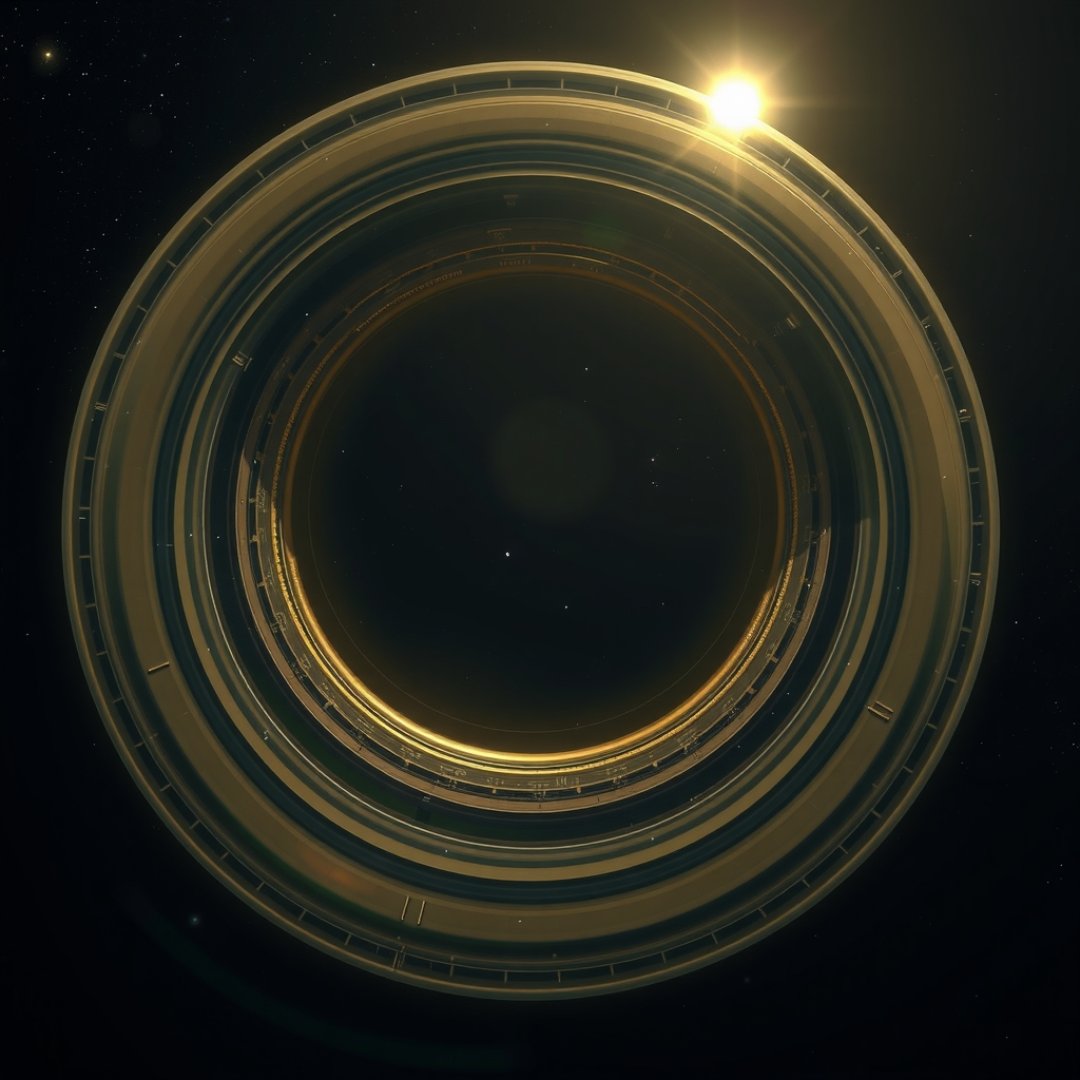
The discovery of the Chariklo ring system fundamentally altered our understanding of planetary science, proving that complex, narrow ring structures are not exclusive to the giant gas planets of our outer solar system. As a Centaur orbiting between Saturn and Uranus, 10199 Chariklo represents a unique laboratory for studying small-body dynamics. The presence of two distinct, dense rings around such a minor body presents significant challenges to standard accretion theories and gravitational modeling. Understanding the Chariklo ring system requires a deep look into how shepherd moonlets, tidal forces, and particle collisions sustain these features over long temporal scales. By analyzing the orbital resonances and potential containment mechanisms, researchers are beginning to piece together how these celestial rings maintain their integrity despite the lack of a massive gravitational anchor, offering new insights into the evolutionary pathways of minor planetary bodies across the cosmos.
Gravitational Constraints and Ring Stability
Maintaining Ring Integrity
Unlike the massive ring systems of Saturn, the Chariklo ring system operates under a much weaker gravitational influence. Scientists believe that the rings are likely contained by small shepherd moonlets, which provide the necessary orbital resonances to prevent the dust and ice particles from dissipating into space. Without these gravitational anchors, the ring material would spread and disappear due to Poynting-Robertson drag and radiation pressure.
- Tidal interactions with companion moonlets.
- Resonant capture of icy debris.
- Balance between gravitational attraction and orbital kinetic energy.
Composition and Material Dynamics
Icy Origins and Evolution
The material within the Chariklo ring system is primarily composed of water ice, likely originating from a significant impact event on the parent body. Structural evolution suggests that these fragments were initially part of an ejecta disk before settling into stable orbits. Over time, mutual collisions between ring particles lead to a process called viscous spreading, which is effectively countered by the aforementioned shepherd satellites, keeping the rings sharp and narrow.
Physical Characteristics
The two rings, designated Oiapoque and Chuí, show signs of varying optical depths. This variation is indicative of dynamic material transport and ongoing replenishment processes, suggesting the ring system is a living, changing structure rather than a static relic of the past.
Implications for Planetary Science
Redefining Small Body Evolution
The existence of rings around a Centaur provides a vital link between asteroids and outer planet rings. It suggests that ring formation is a common phenomenon throughout the solar system, provided the necessary conditions for debris trapping are met. By studying these mechanics, astronomers can infer similar processes occurring around exoplanets, expanding our knowledge of celestial architecture well beyond our own planetary neighbors.
Key Takeaways:
- Ring systems can persist around minor bodies under specific resonance conditions.
- Collisional evolution drives the density profiles observed in the Chariklo system.
- The proximity of Centaurs to giant planets increases the probability of gravitational perturbation that affects ring longevity.
Frequently Asked Questions
What is the Chariklo ring system?
It is the first ring system discovered around a minor planet, specifically the Centaur 10199 Chariklo, located between Saturn and Uranus.
Why are these rings narrow?
The rings are believed to be kept narrow by the gravitational influence of embedded or nearby shepherd moonlets that restrict particle dispersion.
How do these rings evolve over time?
They evolve through a combination of collisional dampening, viscous spreading, and potential replenishment from micrometeoroid impacts on the central body.