Skip to content
  • About Cosmica

Search Site

The universe, explained.

Tag: Astrophysics

Home ยป Astrophysics
Astronomy and Science
November 16, 2026

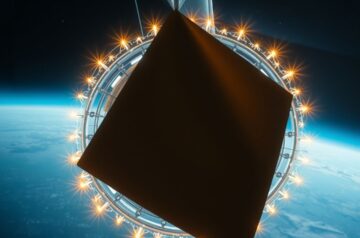
Euclid Satellite Gravitational Lensing Detection Capabilities Explained

The European Space Agency’s Euclid mission represents a monumental leap forward in our quest to understand the underlying geometry of the cosmos. By leveraging highly precise gravitational lensing detection, the satellite is designed to chart the history of the universe’s expansion over the last ten billion years. This technique,...
Continue reading
Astronomy and Science
November 9, 2026

Witch Head Nebula Electromagnetic Radiation Properties and Cosmic Structure

The Witch Head Nebula, cataloged by astronomers as IC 2118, represents one of the most visually striking examples of a reflection nebula within our galactic neighborhood. Located roughly 900 light-years from Earth in the constellation Eridanus, this ethereal cloud of dust and gas acts as a celestial mirror. The...

Continue reading
Astronomy and Science
November 1, 2026

Decoding Betelgeuse Atmospheric Stellar Variability Mechanics

Betelgeuse, the prominent red supergiant in the Orion constellation, has long captivated astronomers due to its unpredictable behavior and dramatic shifts in luminosity. At the heart of this phenomenon lies complex stellar variability mechanics that govern how the star pulsates, loses mass, and undergoes periodic cycles of contraction and...

Continue reading
Astronomy and Science
October 28, 2026

Habitable Zone Exoplanet Starbirth Mechanisms and Planetary Stability

The quest to find life beyond Earth hinges on understanding the complex processes behind habitable zone exoplanet starbirth mechanisms. When a molecular cloud collapses to form a new star, the surrounding protoplanetary disk becomes the cradle for future worlds. The specific dynamics of this environment determine whether a planet...

Continue reading
Astronomy and Science
October 26, 2026

Orion Nebula Stellar Nursery Physical Structure Explained

Visible to the naked eye as a fuzzy patch in the sword of the Orion constellation, the Orion Nebula stands as the most prominent stellar nursery in our night sky. The Orion Nebula stellar nursery physical structure is a vast, complex environment where massive clouds of cold molecular hydrogen...

Continue reading
Astronomy and Science
October 21, 2026

Cassiopeia A Supernova Remnant X-Ray Emission: A Cosmic Laboratory

When we peer into the depths of the Milky Way, few objects command as much scientific interest as the Cassiopeia A supernova remnant. This massive cloud of debris, located approximately 11,000 light-years away from Earth, serves as a primary site for high-energy astrophysics research. By studying the Cassiopeia A...

Continue reading
Astronomy and Science
October 7, 2026

Pa 30 Remnant Explosive Origin Analysis: Unveiling a Rare Cosmic Event

The study of the Pa 30 remnant explosive origin analysis provides astronomers with a rare window into the chaotic final moments of specific stellar deaths. Located within the Milky Way, this fascinating structure is associated with the historical transient event known as SN 1181. For decades, researchers have been...

Continue reading
Astronomy and Science
October 2, 2026

PRIMA Infrared Telescope Scientific Observation Potential

The PRIMA Infrared Telescope scientific observation potential represents a significant leap forward in our ability to probe the obscured regions of the universe. By targeting the far-infrared spectrum, this mission is engineered to penetrate dense clouds of interstellar dust that effectively block the view of traditional optical instruments. Scientists...

Continue reading
Astronomy and Science
September 29, 2026

Cornell Lightsail Interstellar Propulsion Capability: Reaching the Stars

The prospect of traveling beyond our solar system has long been confined to the realm of science fiction, yet the development of the Cornell Lightsail Interstellar propulsion capability is bringing this ambition closer to reality. By utilizing high-intensity laser arrays to push ultra-thin sails through the vacuum of space,...

Continue reading
Astronomy and Science
September 27, 2026

Chariklo Ring System Structural Evolution Mechanics Explained

The discovery of the Chariklo ring system fundamentally altered our understanding of planetary science, proving that complex, narrow ring structures are not exclusive to the giant gas planets of our outer solar system. As a Centaur orbiting between Saturn and Uranus, 10199 Chariklo represents a unique laboratory for studying...

Continue reading

Posts navigation

Older posts→
2026 © The universe, explained.Privacy PolicyTheme by SiteOrigin