
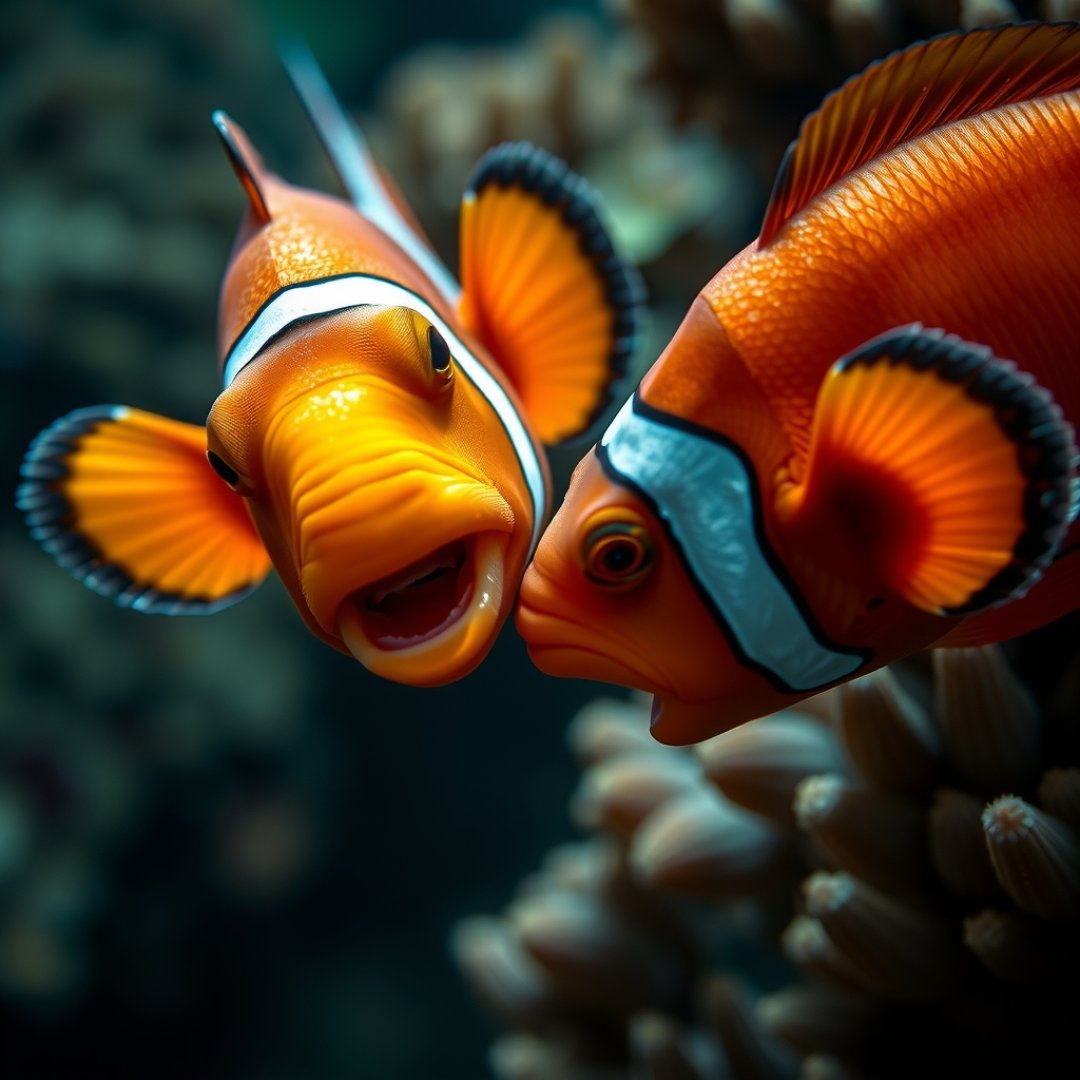
While they are often depicted as docile residents of the reef, clownfish aggression plays a crucial role in their survival and territorial maintenance within their host anemones. These vibrant damselfish, famous for their symbiotic relationships, display a complex array of defensive behavioral adaptations that allow them to guard their specialized living space against potential intruders. From energetic chasing behaviors to audible clicking sounds, the intensity of their defensive displays often belies their small stature. Understanding these behaviors offers significant insights into how reef species partition resources and navigate the high-stakes environment of the coral reef. By analyzing the social structure and physical posturing involved in protecting their anemone, marine biologists can better comprehend the evolutionary pressures that drive these intense defensive interactions in one of the ocean’s most competitive ecosystems.
Territorial Maintenance and Hierarchy
Establishing Dominance
Within a single anemone, a strictly enforced social hierarchy dictates the behavior of the resident clownfish. This hierarchy is usually dominated by the largest female, followed by a smaller, sexually active male, and several non-breeding juveniles.
- Dominance Displays: Subordinate fish must constantly acknowledge the status of their superiors to avoid being targets of clownfish aggression.
- Size-based Order: Aggressive posturing is most frequently initiated by higher-ranking individuals to ensure that space and food resources are managed efficiently.
- Submissive Signals: When faced with an aggressive superior, lower-ranking fish utilize specific body postures to appease the dominant individual and minimize physical conflict.
Defense Against Predators and Intruders
Protecting the Host Anemone
The clownfish’s primary motivation for defensive behavior is the protection of its host anemone, which provides both a safe refuge from predators and a substrate for egg-laying. While their defensive actions are rarely lethal, they are remarkably persistent.
When a threat approaches the anemone, the clownfish will often:
- Perform Charge Maneuvers: Rapidly swim toward the intruder, often stopping just inches away to intimidate the newcomer.
- Audible Clicking: Emit sharp, percussive sounds to alert other members of the group to a potential breach.
- Biting: In cases of extreme territorial violation, the fish may resort to nipping at the fins or scales of the invader until it retreats from the host zone.
Evolutionary Advantages of Defensive Behavior
Why Aggression Matters
The energy expended during these conflicts is substantial, yet it serves an essential evolutionary purpose. By defending the anemone, the clownfish ensures that its primary home remains free from competition and potential predators that might graze on the anemone itself.
Adaptive Benefits:
- Resource Preservation: Constant guarding ensures that food trapped by the anemone is prioritized for the resident group.
- Reproductive Success: A secure anemone provides the necessary surface for successful egg clutches, increasing the likelihood of offspring survival.
- Stable Symbiosis: The presence of an active defender helps maintain the long-term health of the anemone, which in turn continues to provide protection to the fish.
Frequently Asked Questions
Are clownfish always aggressive toward other fish?
No, clownfish are generally only aggressive when defending their specific host anemone or when reinforcing their internal social hierarchy.
Do all species of clownfish exhibit the same levels of aggression?
Aggression levels vary significantly between species. Some species, like the Maroon Clownfish, are known to be far more territorial and aggressive than the more docile Ocellaris Clownfish.
Why do clownfish charge at divers?
Divers are perceived as large intruders near the anemone. The clownfish’s aggressive behavior is a defensive instinct meant to scare away a threat that they view as a danger to their territory.