
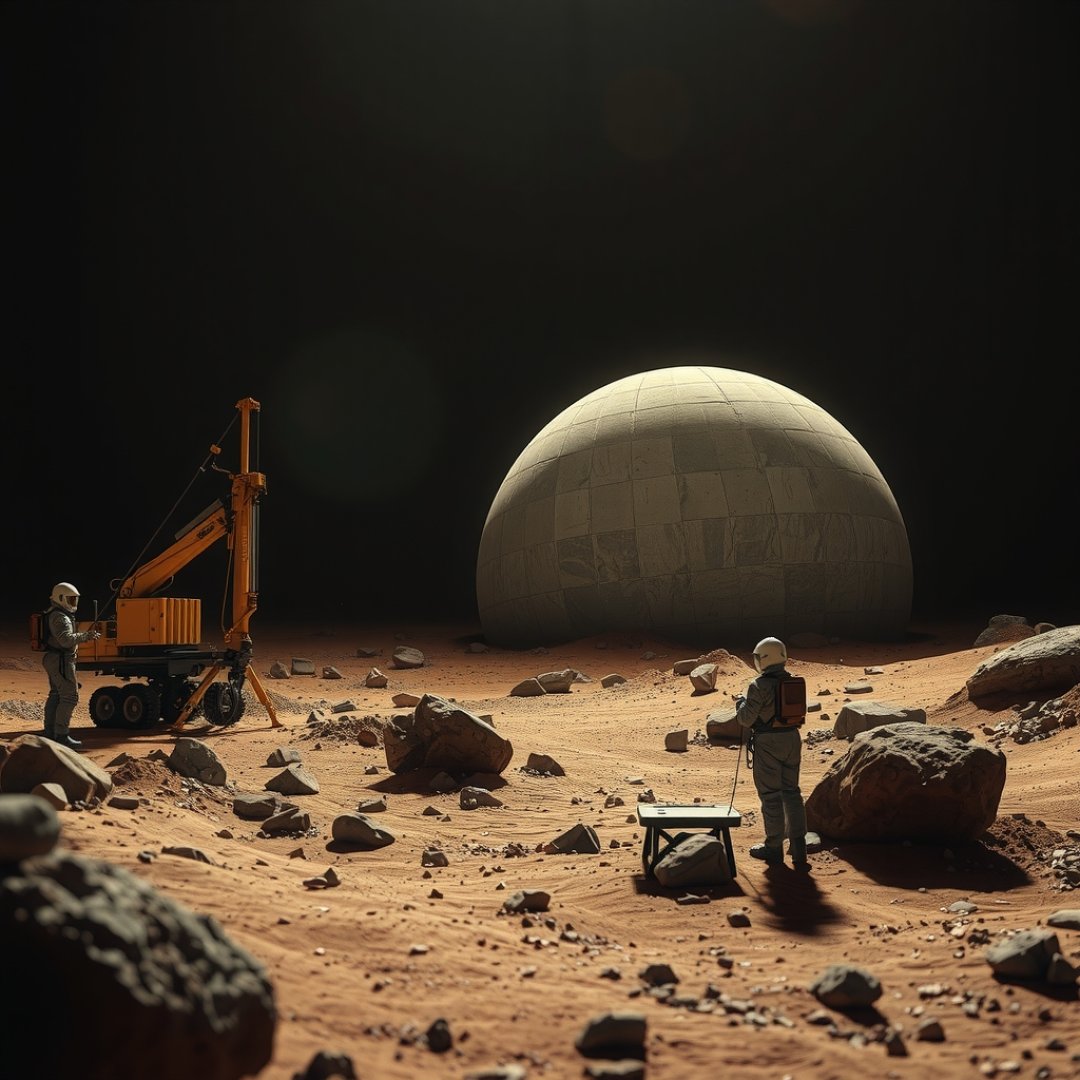
The Japan Aerospace Exploration Agency, or JAXA, is spearheading a groundbreaking endeavor known as the Martian Moon Exploration (MMX) mission. This ambitious project aims to reach the Martian system, specifically targeting the small, potato-shaped moon Phobos. By conducting sophisticated Martian Moon Exploration, scientists hope to resolve the long-standing debate regarding whether the moons of Mars are captured asteroids or the result of a massive impact event that occurred early in the planet’s history. The spacecraft is designed to orbit the Red Planet and make multiple flybys of Phobos, eventually touching down to collect a surface sample of at least 10 grams. This precious material will be sealed in a capsule and transported back to Earth, marking a significant milestone in interplanetary robotics. Beyond mere observation, this mission represents a shift toward understanding the evolution of the solar system’s terrestrial worlds through the lens of their unique satellites. As we prepare for this historic journey, the insights gained will prove invaluable for future human exploration efforts and our fundamental understanding of planetary formation processes in our cosmic neighborhood.
Scientific Objectives of the MMX Mission
Decoding Planetary Origins
The primary goal of the mission is to clarify the origin of the Martian moons. By analyzing the physical and chemical composition of regolith samples from Phobos, researchers can determine if the moon is a primordial body or a byproduct of an ancient, violent collision. Determining the origin is essential for understanding how the Mars system reached its current state.
Mapping the Surface
The spacecraft is equipped with a suite of advanced sensors designed to map the moon in high resolution. This topographical data will not only aid in the selection of a landing site but will also provide a detailed history of the moon’s surface exposure to the harsh environment of space and solar radiation.
Technological Challenges of Sample Return
Navigating Low Gravity Environments
One of the most difficult aspects of the mission is navigating the extremely low-gravity environment of Phobos. Unlike a planet with a significant gravitational pull, landing on a small moon requires incredibly precise trajectory calculations and autonomous control systems.
The Return Flight
After a successful touchdown, the craft must launch itself back into orbit and navigate a complex flight path back to Earth.
- Developing a heat shield capable of surviving atmospheric reentry at high velocities.
- Managing energy consumption over a multi-year mission duration.
- Ensuring the integrity of the samples during the long-distance voyage home.
Contribution to Future Human Missions
Staging for Deep Space Travel
Phobos is often considered a potential hub for future human missions to Mars. The Martian Moon Exploration project provides the necessary reconnaissance to evaluate the safety and stability of the surface for potential human-tended equipment or refueling stations. By gathering data on surface hazards, such as dust stability and radiation levels, MMX acts as a precursor for long-term human presence in the Martian system.
Frequently Asked Questions
What is the main goal of the JAXA MMX mission?
The main goal is to explore the moons of Mars, specifically Phobos, and return a surface sample to Earth to determine the moon’s origin.
When is the MMX mission expected to return to Earth?
The mission timeline targets a return to Earth in the late 2020s, following several years of transit and scientific operations in the Martian system.
Why is Phobos the primary target instead of Deimos?
Phobos is larger and orbits closer to Mars, making it a more accessible target for sample return and a more strategic location for potential future human mission staging.