
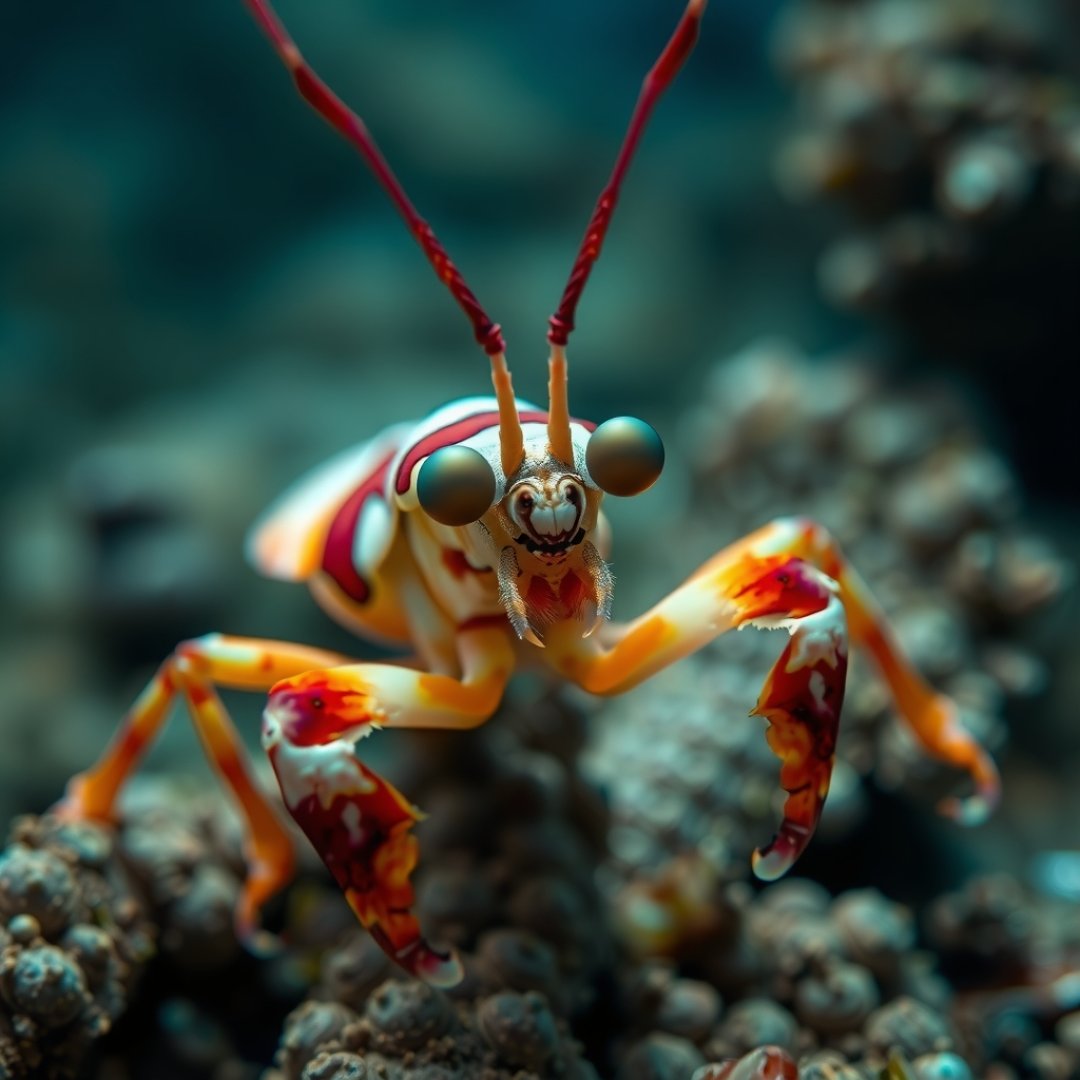
The mantis shrimp visual system is widely considered one of the most sophisticated and complex optical arrays in the animal kingdom. While humans rely on three types of color-receptive cone cells to interpret the spectrum, these predatory crustaceans possess up to sixteen distinct types of photoreceptors. This biological marvel allows them to perceive not only a massive range of colors but also polarized light and multispectral information that remains invisible to the human eye. By analyzing how they process light, researchers have gained profound insights into the evolution of vision and the mechanics of neural signaling in marine invertebrates. This article explores the unique physiological adaptations that allow these creatures to thrive in complex underwater environments, demonstrating why the study of their eyes is a significant frontier in modern sensory biology research.
The Physiology of Compound Eyes
Anatomy of Extraordinary Vision
Unlike simple camera-type eyes, the mantis shrimp utilizes a pair of stalked, mobile compound eyes. Each eye is divided into three distinct regions, known as the mid-band, which is specialized for color and polarization tasks. This specialized architecture allows the animal to scan its environment independently with each eye, effectively performing depth perception and motion tracking simultaneously.
- Mid-band specializations: The central rows of ommatidia handle complex color discrimination.
- Independence of movement: Each eye moves independently, allowing for a 360-degree field of view.
- Stereoscopic depth: Despite moving eyes, they achieve high-precision depth perception to strike prey.
Color Discrimination and Multispectral Processing
Beyond Human Spectral Sensitivity
While human color vision is limited to a relatively narrow band of the electromagnetic spectrum, the mantis shrimp processes light using a diverse array of pigments. Instead of mixing signals in the brain as mammals do, they utilize a unique scanning mechanism that minimizes cognitive load.
Research suggests that their system is less about comparing color ratios and more about recognizing spectral signatures. This allows for instantaneous identification of objects, which is critical for their survival in competitive reef environments where camouflage is prevalent.
The Role of Polarized Light
Sensitivity to Light Orientation
Perhaps the most fascinating aspect of their sight is the ability to detect circular polarization. While polarized sunglasses for humans only address horizontal glare, these crustaceans can perceive the orientation of light waves as they reflect off surfaces. This capability is thought to be used in communication and prey detection, as many marine organisms reflect light in polarized patterns that are invisible to predators who lack these specialized receptors.
- Communication: Using polarization for signaling mates.
- Navigation: Orientation based on sun-light scattering in the water column.
- Stealth detection: Identifying prey that relies on light-reflecting camouflage.
Frequently Asked Questions
How many photoreceptors do mantis shrimp have compared to humans?
Humans typically have three types of color-receptive cones, whereas certain species of mantis shrimp possess up to sixteen different types of photoreceptors for color and light sensitivity.
Why is the mantis shrimp visual system important for technology?
Scientists study these eyes to develop advanced camera sensors and optical recording devices that can detect polarized light or multispectral information more efficiently than current digital sensors.
Can mantis shrimp see ultraviolet light?
Yes, many species within this group are capable of seeing into the ultraviolet range, which assists them in navigating bright, shallow reef waters and communicating with others.