
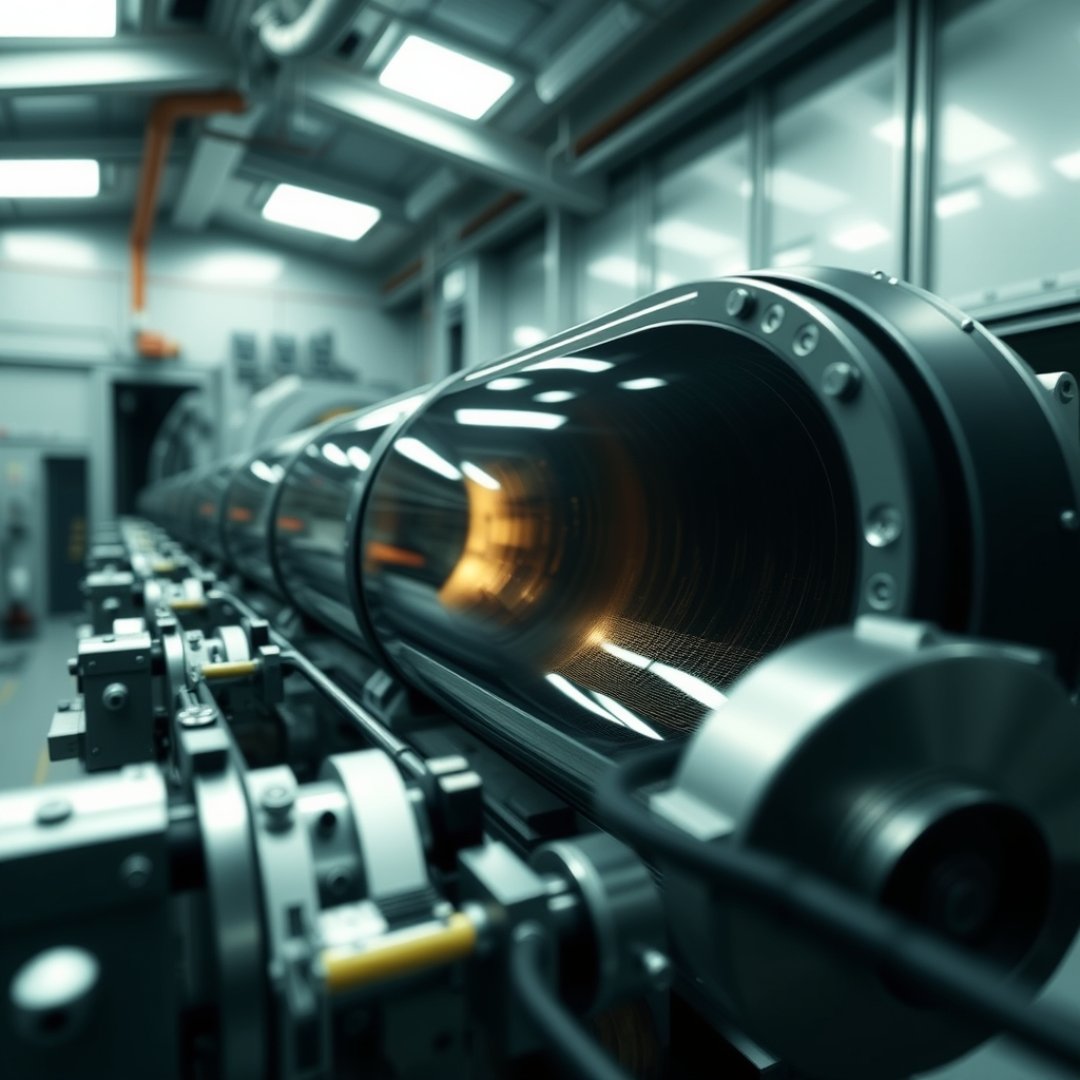
The quest to detect ripples in the fabric of spacetime requires hardware of unprecedented precision, which is why LIGO interferometer sensitivity enhancement through thermal imaging has become a cornerstone of modern gravitational wave research. By monitoring the microscopic temperature fluctuations that cause physical deformations in the massive mirrors of the Laser Interferometer Gravitational-Wave Observatory, scientists can mitigate thermal noise that would otherwise obscure the faint signals from distant black hole collisions. These thermal imaging innovations allow researchers to calibrate the instrument with extreme accuracy, ensuring that the mirrors remain in a stable state even as they are bombarded by high-power laser beams. As we move deeper into the era of multi-messenger astronomy, mastering the thermal environment of these sensitive instruments is not merely an engineering achievement, but a fundamental prerequisite for understanding the most violent events in our universe and expanding the reach of our cosmic detectors.
The Challenge of Thermal Noise in Laser Interferometry
Why Thermal Fluctuations Matter
At the heart of the LIGO detectors lie enormous fused silica mirrors suspended in high-vacuum chambers. When these mirrors absorb energy from the high-power lasers used to measure spacetime displacements, they experience minute thermal expansions. These thermal deformations shift the optical alignment of the mirrors, effectively creating noise that mimics the signature of gravitational waves.
The Role of Brownian Motion
- Thermal energy causes molecules in the mirror coating to vibrate, known as Brownian noise.
- This motion directly translates into jitter in the laser beam, limiting the detector’s low-frequency range.
- Managing these vibrations is critical for maintaining the stability of the long-arm arms of the interferometer.
Implementing Thermal Imaging for Precise Monitoring
Advanced Infrared Calibration
By integrating high-resolution thermal imaging systems, engineers can map the temperature distribution across the mirror surfaces in real-time. This diagnostic data provides a feedback loop that allows the cooling systems to stabilize the mirror temperature with sub-degree precision. By neutralizing these heat gradients, the system drastically reduces the thermo-elastic noise that would normally degrade the sensitivity of the detector.
Active Feedback Loops
The system utilizes:
- Non-contact sensors: Measuring emissivity without introducing physical disturbances.
- Automated compensation: Adjusting the laser power profile to balance the thermal load.
- Predictive modeling: Forecasting potential thermal instability before it manifests as noise in the data stream.
Impact on Gravitational Wave Astronomy
Expanding the Detectable Horizon
Every decibel of noise reduction translates into a cubic increase in the observable volume of the universe. With improved thermal management, LIGO can detect mergers of neutron stars and black holes at significantly greater distances. This sensitivity upgrade is essential for testing general relativity under extreme conditions and identifying exotic astrophysical phenomena that occur in the distant corners of the cosmos.
Future Outlook for Sensitivity
As we prepare for future iterations like the A+ upgrade, thermal imaging techniques will continue to evolve. By mitigating the constraints imposed by our own physical equipment, we gain a clearer window into the dark, silent depths of space, allowing us to map the history of the universe through the gravitational waves emitted during the deaths of giant stars.
Frequently Asked Questions
What is the main source of noise in LIGO detectors?
The main sources of noise include seismic vibrations, quantum fluctuations, and thermal noise generated by the internal vibrations of mirror coatings.
How does thermal imaging help LIGO?
Thermal imaging allows scientists to map heat distributions on mirrors, enabling active cooling and correction of physical deformations caused by thermal expansion.
Why is sensitivity enhancement critical?
Increased sensitivity allows the observatory to detect weaker gravitational waves from further away, significantly expanding the volume of space we can study.