
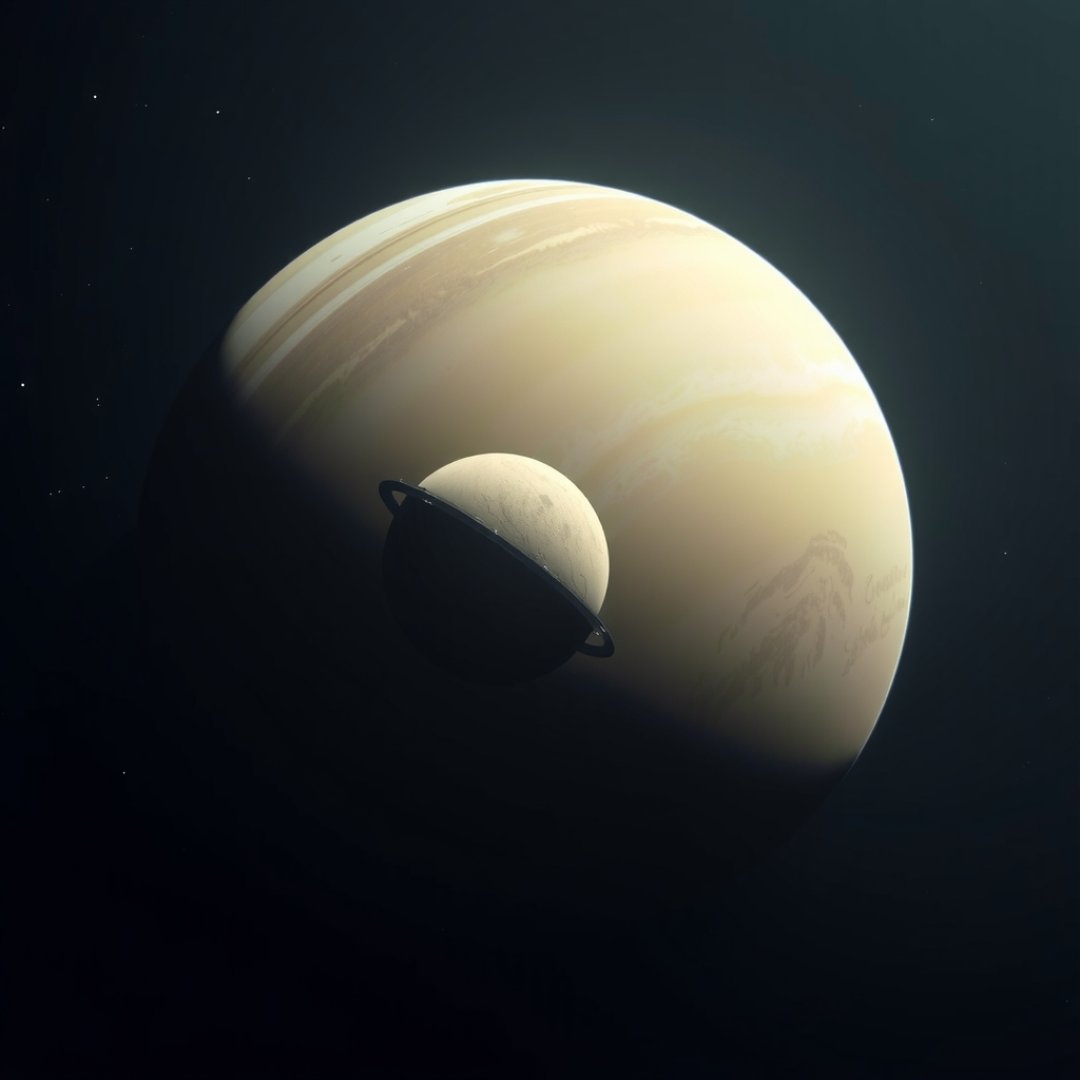
The Neptune moon Triton orbital capture history stands as one of the most compelling narratives in planetary science. Unlike the regular satellites of the gas giants, which likely formed in situ within a surrounding accretion disk, Triton orbits Neptune in a retrograde direction—meaning it moves opposite to the planet’s rotation. This anomalous motion, combined with its highly inclined orbit, suggests that Triton was not born alongside Neptune. Instead, scientific consensus points toward a dramatic event in the early solar system where the gravity of the giant planet ensnared a wayward Kuiper Belt Object. Understanding the mechanics of Triton orbital capture provides essential clues about the dynamical migration of planets and the volatile history of the outer solar system regions beyond our familiar neighborhood.
The Evidence for Capture
Why Triton is an Outsider
Triton is unique among the moons of our solar system due to its physical and orbital characteristics. Its retrograde orbit is the primary indicator that it did not coalesce from the same cloud of gas and dust that formed Neptune. If it had formed locally, it would naturally follow a prograde path aligned with Neptune’s equator.
- Retrograde Motion: Moving in reverse compared to Neptune’s rotation is a hallmark of a captured body.
- Orbital Inclination: The orbit is tilted at a significant angle, further distancing it from the patterns of typical satellite formation.
- Compositional Links: Triton shares deep chemical similarities with Pluto, cementing its status as an immigrant from the Kuiper Belt.
The Mechanism of the Capture Event
From Kuiper Belt to Satellite
The transition from an independent heliocentric object to a captive moon was likely a violent and complex process. Astronomers propose that Triton was originally part of a binary system in the outer reaches of the solar system. As this binary pair drifted too close to Neptune, the planet’s immense tidal forces exerted a gravitational pull that separated the two.
Tidal Energy Dissipation was crucial. As Triton entered the orbit of Neptune, it would have been accompanied by its binary partner. One object was ejected from the system entirely to conserve energy, while Triton lost enough orbital energy to remain trapped. Following the initial capture, Triton likely occupied a highly eccentric orbit, which circularized over millions of years through tidal interaction, likely melting the moon’s interior in the process.
Implications for Solar System Evolution
A Window into the Past
Studying the history of Triton allows scientists to map the migration patterns of the giant planets. The presence of such a massive, captured satellite indicates that the early solar system was a highly dynamic environment where massive objects were frequently moved, ejected, or trapped by the gravitational influence of the gas giants.
The Fate of Triton
Triton is not permanently secure. Because of its retrograde orbit, tidal forces are causing it to slowly spiral inward toward Neptune. Eventually, billions of years from now, it will cross the Roche limit and be torn apart, likely forming a spectacular ring system around Neptune similar to that of Saturn, but significantly more massive.
Frequently Asked Questions
Why is Triton’s orbit considered proof of capture?
Triton’s retrograde orbit, meaning it travels in the opposite direction of Neptune’s rotation, is nearly impossible for a body to adopt during standard planetary formation.
Was Triton always a moon of Neptune?
No, scientists believe Triton was originally a Kuiper Belt object, likely part of a binary system that was disrupted by Neptune’s gravity.
What will happen to Triton in the future?
Due to tidal interactions, Triton is slowly spiraling toward Neptune and will eventually be destroyed to form a new ring system.