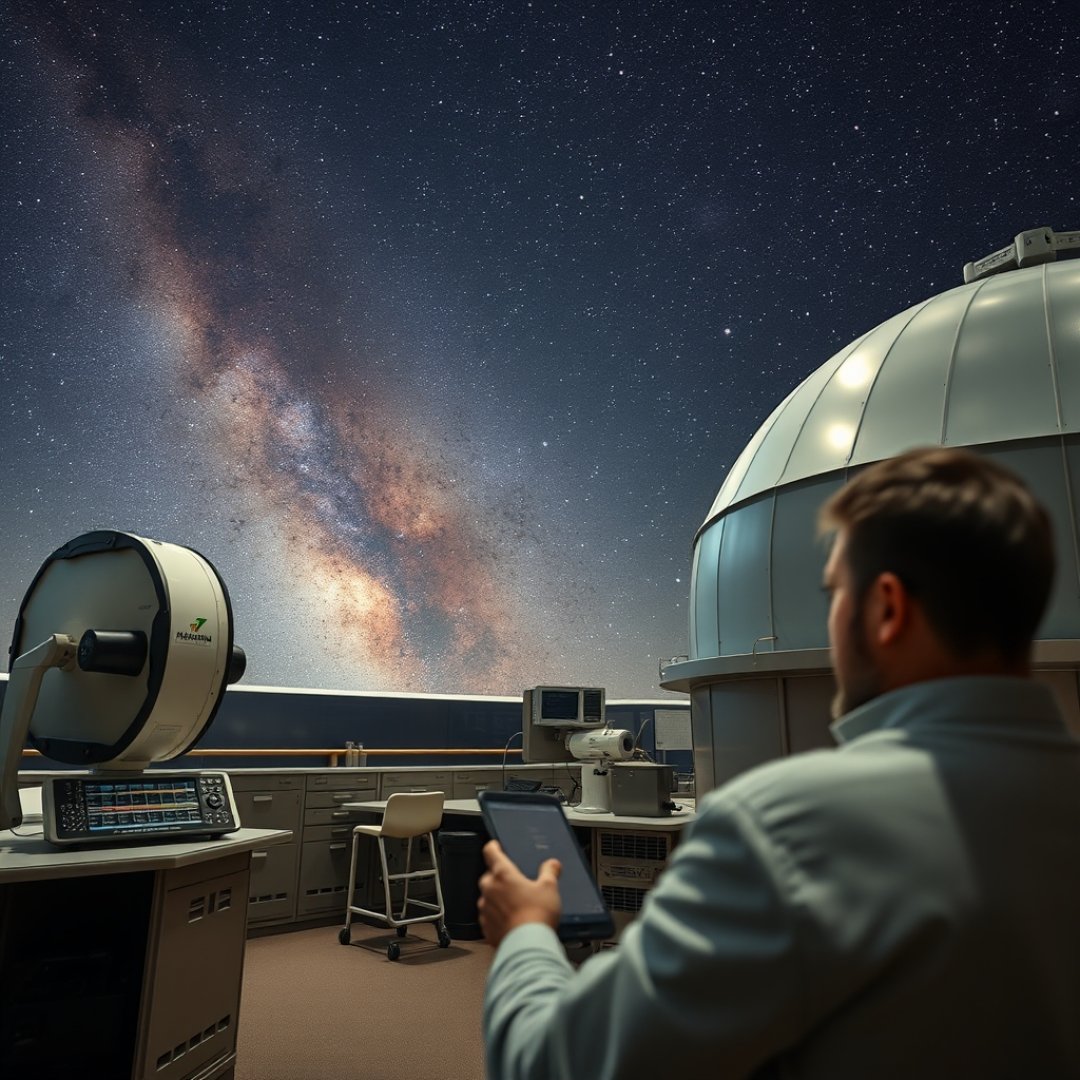
The Vera C. Rubin Observatory is poised to revolutionize our understanding of the universe through its unprecedented approach to wide field cosmic imaging. By utilizing the Legacy Survey of Space and Time (LSST), astronomers will capture high-resolution images of the entire visible sky every few nights. This systematic, recurring survey provides a time-domain map of the heavens, allowing researchers to track transient phenomena that would otherwise remain hidden from traditional, narrow-view telescopes. As we stand on the threshold of this decade-long mission, the potential to unlock mysteries regarding dark matter distribution and the accelerating expansion of the cosmos has never been more tangible, marking a significant milestone in modern observational science and high-precision sky mapping.
The Technology Behind the LSST Camera
Engineering at the Limit of Physics
At the heart of the observatory lies the world’s largest digital camera, capable of capturing 3.2-gigapixel images. This massive sensor array allows for the efficiency required for wide field cosmic imaging, covering a field of view roughly 40 times the size of the full moon in a single exposure. This architectural choice is deliberate: by observing vast swaths of the sky simultaneously, the observatory maximizes the probability of detecting fleeting celestial events.
- High-Resolution Optics: The three-mirror design minimizes aberrations across the expansive field.
- Rapid Data Acquisition: High-speed readout electronics ensure that the system can cycle between exposures with minimal downtime.
Mapping Dark Matter and Dark Energy
Probing the Invisible Universe
One of the primary scientific goals involves using gravitational lensing to map the presence of dark matter. By observing the slight distortions in the light from distant galaxies, scientists can infer the distribution of mass between those galaxies and our own planet. Wide field cosmic imaging is essential here, as it provides the statistical power needed to distinguish between subtle cosmic signals and observational noise.
Furthermore, the survey will trace the history of the universe’s expansion. By measuring the distribution and evolution of billions of galaxies over time, the Rubin Observatory will constrain the properties of dark energy, the mysterious force driving the accelerated growth of our universe.
Monitoring the Dynamic Night Sky
A Cinema of the Cosmos
Unlike static surveys of the past, the LSST mission acts as a cosmic motion picture. Every few nights, the telescope returns to the same patch of sky, creating a database of change. This capability is critical for:
- Supernova Detection: Identifying stellar explosions in real-time to analyze their brightness and decay.
- Asteroid Tracking: Monitoring Near-Earth Objects (NEOs) to improve planetary defense protocols.
- Variable Stars: Cataloging stars that change in luminosity to better understand stellar life cycles.
Frequently Asked Questions
What is the primary mission of the Vera C. Rubin Observatory?
The primary mission is the Legacy Survey of Space and Time (LSST), a ten-year project designed to map the entire visible sky to study dark matter, dark energy, and transient astronomical events.
How often will the telescope image the same area of the sky?
The telescope is designed to revisit the same patches of the sky approximately every three to four nights, allowing for the detection of rapid changes in the celestial environment.
Why is the camera’s resolution so important?
The 3.2-gigapixel resolution is vital for capturing vast regions of space in high detail, ensuring that researchers can identify faint objects across the entire observable horizon without sacrificing clarity.