
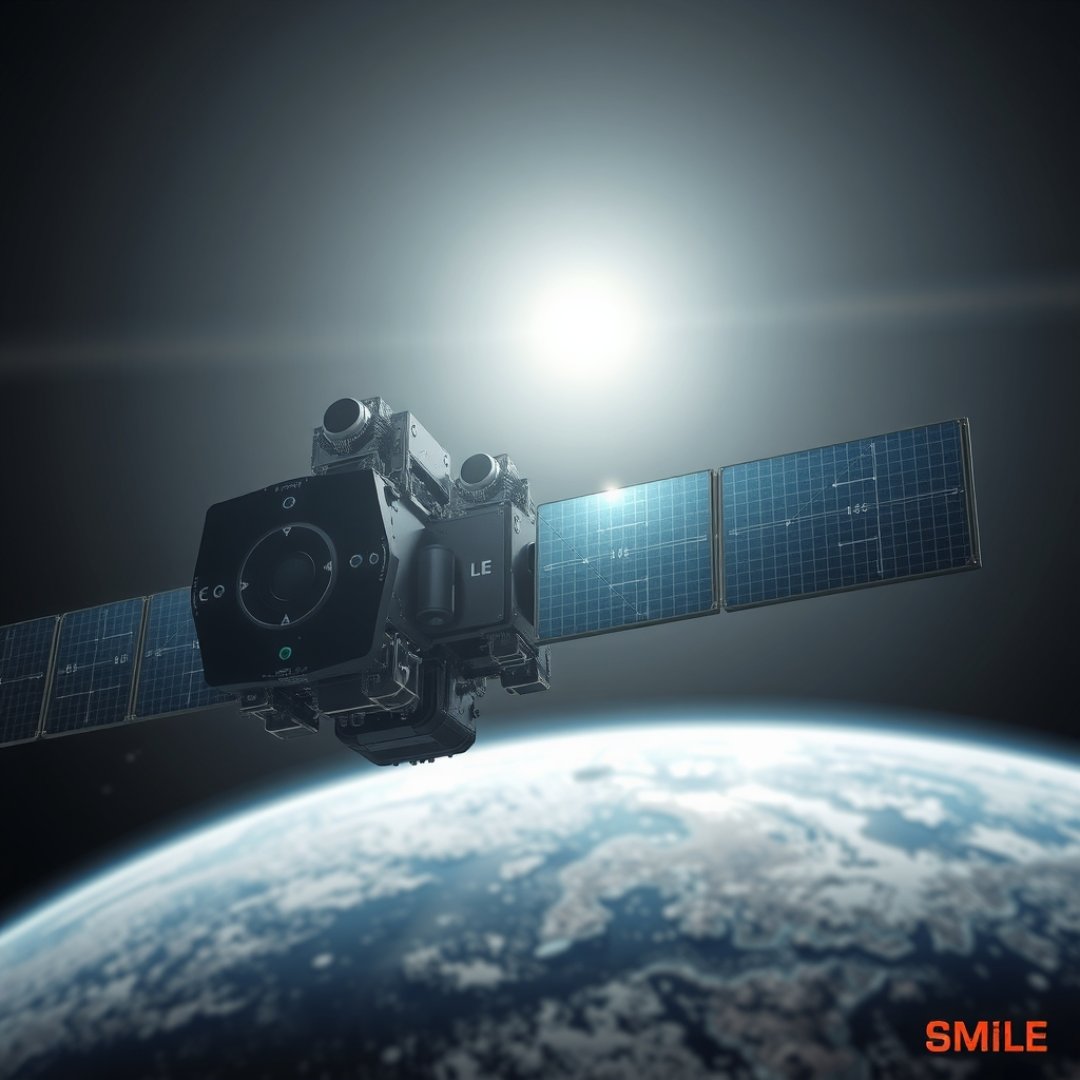
The Solar wind Magnetosphere Ionosphere Link Explorer, better known as the SMILE satellite, represents a groundbreaking collaborative effort between the European Space Agency and the Chinese Academy of Sciences. As we push the boundaries of heliophysics, understanding the complex, dynamic relationship between our planet and the sun has become a top priority for space agencies worldwide. The mission scope focuses on the systematic observation of the Earth’s magnetosphere to uncover how solar wind energy is transferred into the geospace environment. By capturing high-cadence, global images of auroral activity and X-ray emissions at the magnetopause, the SMILE satellite aims to provide unprecedented data that will refine our current space weather forecasting capabilities. This mission is essential not only for academic research but also for protecting the technological infrastructure that modern society relies upon every day, as solar storms pose significant risks to satellites, global communication networks, and power grids.
The Scientific Core of the Mission
Decoding Magnetospheric Dynamics
The primary goal of the SMILE mission is to bridge the knowledge gap regarding the global response of the magnetosphere to solar wind drivers. Traditional monitoring methods have relied heavily on localized satellite data, which provides a narrow snapshot of planetary interactions. In contrast, the SMILE satellite utilizes a combination of an X-ray imager and an ultraviolet imager to produce continuous, wide-field snapshots of these interactions.
- Magnetopause Observation: Mapping the boundary where solar wind meets the magnetosphere.
- Cusp Monitoring: Tracking how energy flows into the polar regions.
- Auroral Imaging: Capturing the full-disk auroral displays to correlate them with magnetospheric shifts.
Technological Advancements in X-Ray Imaging
Innovation in Space Observation
A key aspect of the SMILE mission scope involves the use of specialized instruments that can detect X-ray emissions created by the charge exchange between solar wind ions and neutral exospheric atoms. This allows scientists to see the invisible structure of the magnetosphere directly.
The payload is designed to be highly sensitive to these faint signals, providing a 3D perspective of space weather events. By monitoring these structures in real-time, researchers can observe the onset of magnetospheric substorms and solar wind impact transients with greater accuracy than ever before.
Impact on Global Space Weather Forecasting
Preparing for Solar Disruptions
As the human presence in space grows and the dependency on orbital assets increases, the need for robust space weather intelligence has never been more acute. The data gathered by the SMILE satellite will serve as a critical input for predictive models.
Why this data matters:
- Improved warning systems for satellite operators during intense geomagnetic storms.
- Enhanced protection protocols for long-distance power transmission lines.
- Deepening our fundamental understanding of planetary protection in the solar system.
Frequently Asked Questions
What is the SMILE satellite mission?
SMILE (Solar wind Magnetosphere Ionosphere Link Explorer) is a joint mission between ESA and the Chinese Academy of Sciences designed to observe the Earth’s magnetosphere and its interaction with the solar wind.
How does the SMILE satellite observe the magnetosphere?
It uses advanced X-ray and ultraviolet imaging instruments to monitor the magnetopause and auroral activity, providing a global view of how solar wind energy enters the Earth’s environment.
Why is the SMILE mission important for Earth?
The mission helps improve our ability to predict space weather, which is essential for protecting satellite communications, navigation systems, and power grids from solar-induced disruptions.