Skip to content
  • About Cosmica

Search Site

The universe, explained.

Tag: Space Science

Home ยป Space Science
Astronomy and Science
November 1, 2026

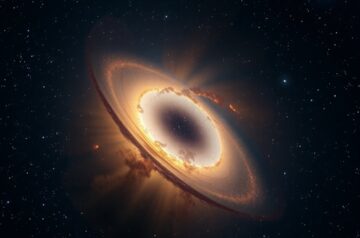
Decoding Betelgeuse Atmospheric Stellar Variability Mechanics

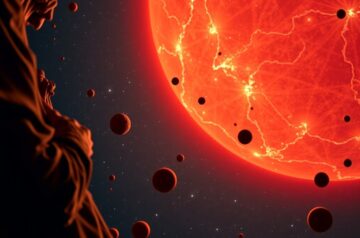
Betelgeuse, the prominent red supergiant in the Orion constellation, has long captivated astronomers due to its unpredictable behavior and dramatic shifts in luminosity. At the heart of this phenomenon lies complex stellar variability mechanics that govern how the star pulsates, loses mass, and undergoes periodic cycles of contraction and...

Continue reading
Astronomy and Science
October 21, 2026

Cassiopeia A Supernova Remnant X-Ray Emission: A Cosmic Laboratory

When we peer into the depths of the Milky Way, few objects command as much scientific interest as the Cassiopeia A supernova remnant. This massive cloud of debris, located approximately 11,000 light-years away from Earth, serves as a primary site for high-energy astrophysics research. By studying the Cassiopeia A...

Continue reading
Astronomy and Science
October 7, 2026

Pa 30 Remnant Explosive Origin Analysis: Unveiling a Rare Cosmic Event

The study of the Pa 30 remnant explosive origin analysis provides astronomers with a rare window into the chaotic final moments of specific stellar deaths. Located within the Milky Way, this fascinating structure is associated with the historical transient event known as SN 1181. For decades, researchers have been...

Continue reading
Astronomy and Science
October 6, 2026

SMILE Satellite Auroral Monitoring Mission Scope and Objectives

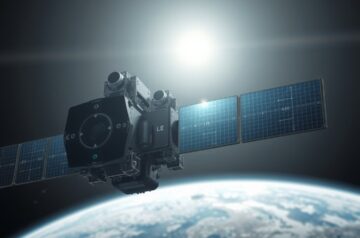
The Solar wind Magnetosphere Ionosphere Link Explorer, better known as the SMILE satellite, represents a groundbreaking collaborative effort between the European Space Agency and the Chinese Academy of Sciences. As we push the boundaries of heliophysics, understanding the complex, dynamic relationship between our planet and the sun has become...

Continue reading
Astronomy and Science
August 15, 2026

Andromeda Galaxy Star Formation Decline Dynamics: A Cosmic Evolution Study

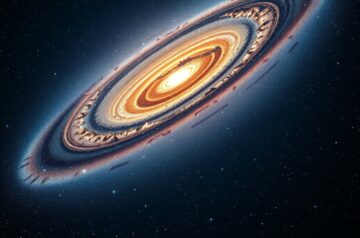
The Andromeda Galaxy, also known as Messier 31, serves as the primary laboratory for astronomers seeking to understand the life cycles of large spiral galaxies within our local neighborhood. Recent observational data derived from space-based telescopes have revealed a significant star formation decline that challenges our previous assumptions about...

Continue reading
Astronomy and Science
July 28, 2026

Chang’e-6 Lunar Samples Chemical Composition Analysis and Scientific Significance

The successful return of mission materials has ignited a global effort to perform a comprehensive Chang’e-6 lunar samples chemical composition analysis, providing researchers with unprecedented access to the far side of the moon. Unlike previous missions that focused on the near side, these specific lunar samples chemical markers contain...

Continue reading
Astronomy and Science
July 22, 2026

Dark Energy Cosmological Model Theoretical Flaws and Current Limitations

The Dark Energy cosmological model serves as the cornerstone of our current understanding regarding the accelerated expansion of the universe, yet it remains riddled with significant theoretical inconsistencies that baffle modern physicists. By positing a uniform energy density permeating the vacuum of space, this framework attempts to account for...

Continue reading
Astronomy and Science
July 21, 2026

Understanding the Perseid Meteor Shower Annual Celestial Mechanism

Every summer, the Northern Hemisphere turns its gaze toward the heavens to witness the Perseid meteor shower, one of the most reliable and brilliant celestial events of the year. This annual spectacle is not merely a random scattering of light across the darkness but a result of a highly...

Continue reading
2026 © The universe, explained.Privacy PolicyTheme by SiteOrigin