
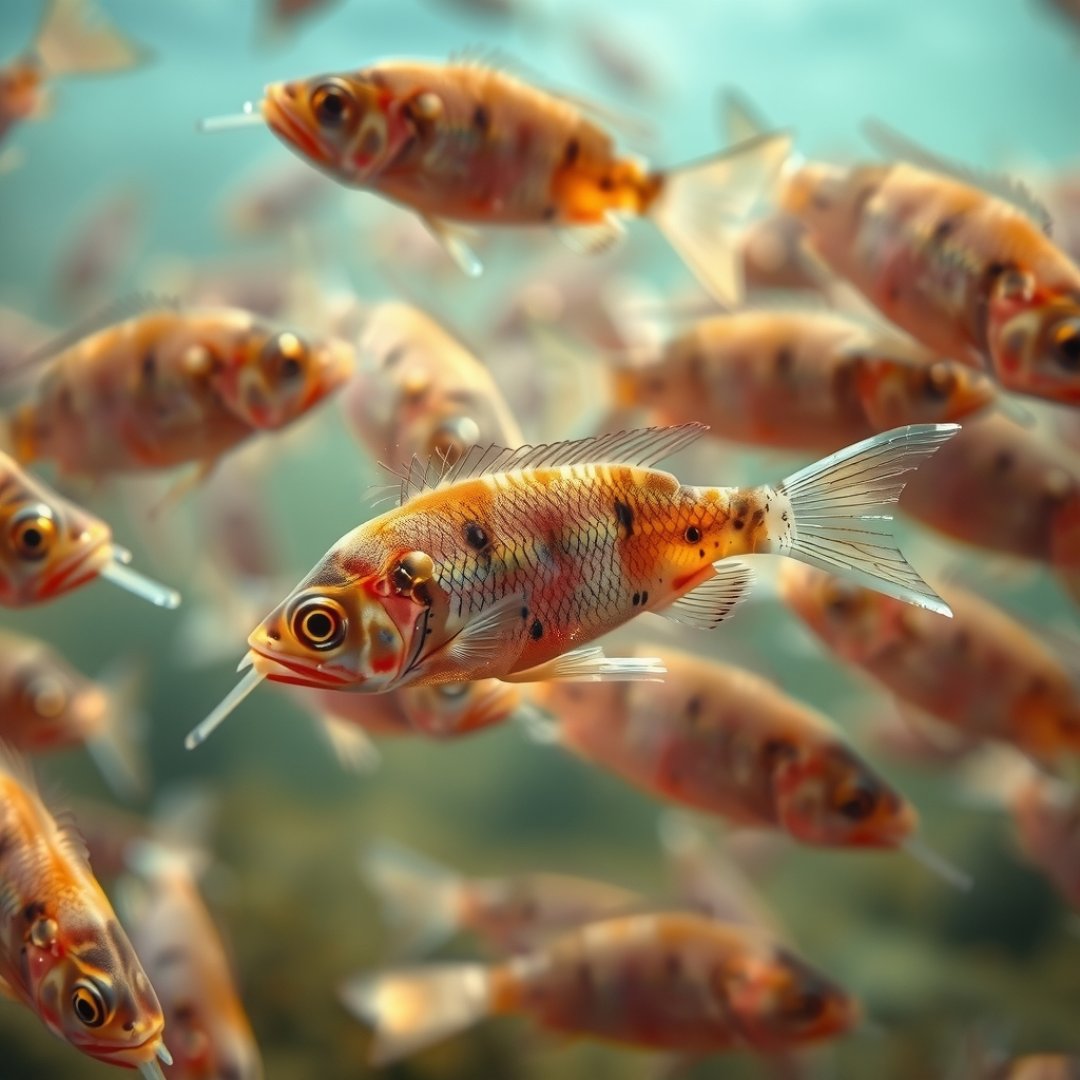
In the quiet corners of freshwater streams and coastal estuaries, stickleback fish perform a rhythmic display of movement that baffles casual observers and fascinates researchers alike. Their ability to maintain a highly organized, cohesive group structure while navigating turbulent waters is not merely a survival instinct but a masterpiece of fluid dynamics. By studying stickleback fish school swimming mechanics, scientists have gained profound insights into the decentralized intelligence required for collective motion. Unlike a school led by a single authority, these small teleost fish utilize a series of sensory feedback loops to react to neighbors and environmental changes in milliseconds. This coordinated behavior serves as a vital defense mechanism against predators, significantly increasing the survival rate of the group by obscuring individual silhouettes and creating a confusing visual target. Understanding these biological strategies offers more than just academic knowledge; it sheds light on the fundamental laws of motion and communication that govern complex systems in the natural world.
Sensory Mechanisms and Spatial Awareness
The Lateral Line System
At the core of these mechanics is the lateral line, a sensory organ running along the sides of the body that detects vibrations and pressure changes in the surrounding water. This organ allows the fish to sense the exact location and movement of neighboring individuals without needing direct eye contact.
Interpersonal Spacing
- Repulsion: Prevents collisions when fish get too close.
- Alignment: Matches the heading of neighbors to maintain flow.
- Attraction: Keeps the school together when a member drifts too far.
Hydrodynamic Advantages in Collective Movement
Minimizing Energy Expenditure
By positioning themselves in the wake of preceding fish, individual sticklebacks can drastically reduce the energy required for swimming. This vortex-assisted swimming pattern, often seen in larger schooling species, is scaled down in the stickleback, allowing the school to travel long distances with minimal effort.
Vortex Shedding
The oscillation of the tail fin creates vortices that neighbors can exploit. By timing their own tail beats to capture energy from these vortices, the fish effectively ride the waves generated by their peers, a phenomenon that provides a distinct metabolic advantage during migration.
Evolutionary Significance of Schooling
The Many-Eyes Hypothesis
Schooling provides an evolutionary edge by increasing the total sensory bandwidth of the group. With more eyes to detect potential predators such as perch or herons, the school can initiate an evasive maneuver long before an individual fish would have sensed the threat alone.
Predator Confusion Effect
When a predator attacks, the school undergoes a rapid transition from a uniform array to a chaotic, shifting mass. This sudden change in the group’s geometry makes it incredibly difficult for a predator to fixate on a single individual, often resulting in a failed hunt.
Frequently Asked Questions
Why do stickleback fish swim in schools?
They swim in schools primarily to improve survival through predator protection, energy conservation, and enhanced foraging efficiency.
Do stickleback fish follow a leader?
No, they do not follow a designated leader. Schooling is a decentralized, self-organizing system where each fish reacts to the movements of its nearest neighbors.
How do they avoid colliding with each other?
They use their lateral line sensory system to detect pressure changes in the water, allowing them to maintain a specific distance from other fish even in murky conditions.