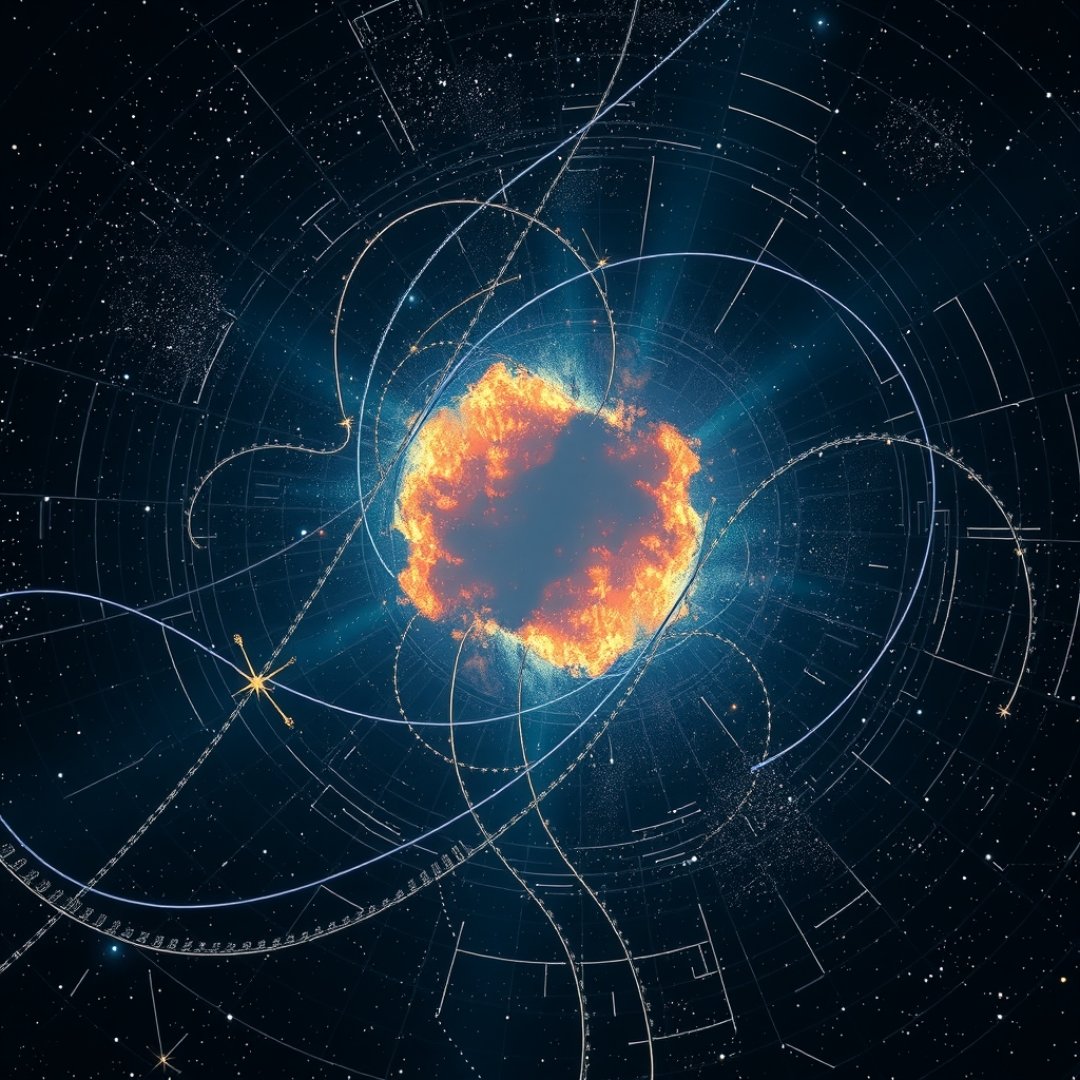
The German-Russian eROSITA mission has fundamentally altered our understanding of the high-energy universe, providing scientists with an unprecedented view of the celestial landscape. By utilizing advanced X-ray optics, the eROSITA telescope high-energy cosmic mapping capabilities allow researchers to perform a deep-sky survey that detects millions of point sources, including active galactic nuclei, distant galaxy clusters, and violent stellar remnants. This mission is unique because it combines a wide field of view with high spectral sensitivity, enabling a systematic scan of the entire sky over multiple years. As the data flows in, we are gaining a clearer picture of the evolution of the cosmic web and the distribution of hot gas within the largest structures in the universe, essentially acting as a census of the most energetic objects known to modern astrophysics.
Technical Foundations of the eROSITA Instrument
Advanced X-ray Optics
At the core of the mission are seven nested Wolter-1 telescope modules, which focus high-energy photons onto advanced CCD detectors. This design allows for a large effective area, which is crucial for capturing faint signals from the edges of the observable universe.
The All-Sky Survey Strategy
- Systematic Scanning: The satellite rotates slowly, scanning the full sky every six months to capture transient events.
- Spectral Resolution: The detectors provide precise energy measurements for every photon captured.
- Noise Suppression: Advanced filtering techniques ensure that background cosmic noise does not compromise the accuracy of the final maps.
Probing the Large-Scale Structure of the Universe
Mapping Galaxy Clusters
Clusters of galaxies are the largest gravitationally bound structures in the universe. By observing the hot, X-ray emitting gas trapped within their potential wells, astronomers can map the distribution of dark matter across cosmic time.
Growth and Evolution
High-energy cosmic mapping provides a historical record of how matter clumped together after the Big Bang. By identifying how these clusters grew and evolved, researchers are testing the limits of the standard cosmological model and the role of dark energy in accelerating cosmic expansion.
Significance of Identifying X-ray Point Sources
Unveiling Black Holes
A significant portion of the mission involves cataloging active galactic nuclei (AGN). These are supermassive black holes at the centers of galaxies that are actively consuming surrounding material, releasing enormous amounts of radiation.
Transient Phenomena
The mission excels at identifying changes in the sky. By comparing subsequent sky surveys, the team can detect:
- Supernova remnants in the early stages of explosion.
- Tidal disruption events where a star is torn apart by a black hole.
- Rapidly flaring binary star systems within our own Milky Way galaxy.
Frequently Asked Questions
What is the primary goal of the eROSITA mission?
The primary goal is to create the most comprehensive X-ray map of the universe to study the evolution of galaxy clusters, black holes, and the cosmic web.
How does eROSITA map the sky differently than previous missions?
Unlike earlier missions that focused on specific patches of the sky, eROSITA conducts a continuous, multi-year, all-sky survey with higher sensitivity and a wider field of view.
Why is X-ray observation important for astrophysics?
X-rays are emitted by the most energetic processes in the universe, such as black hole accretion and extreme stellar explosions, which are often invisible in optical light.