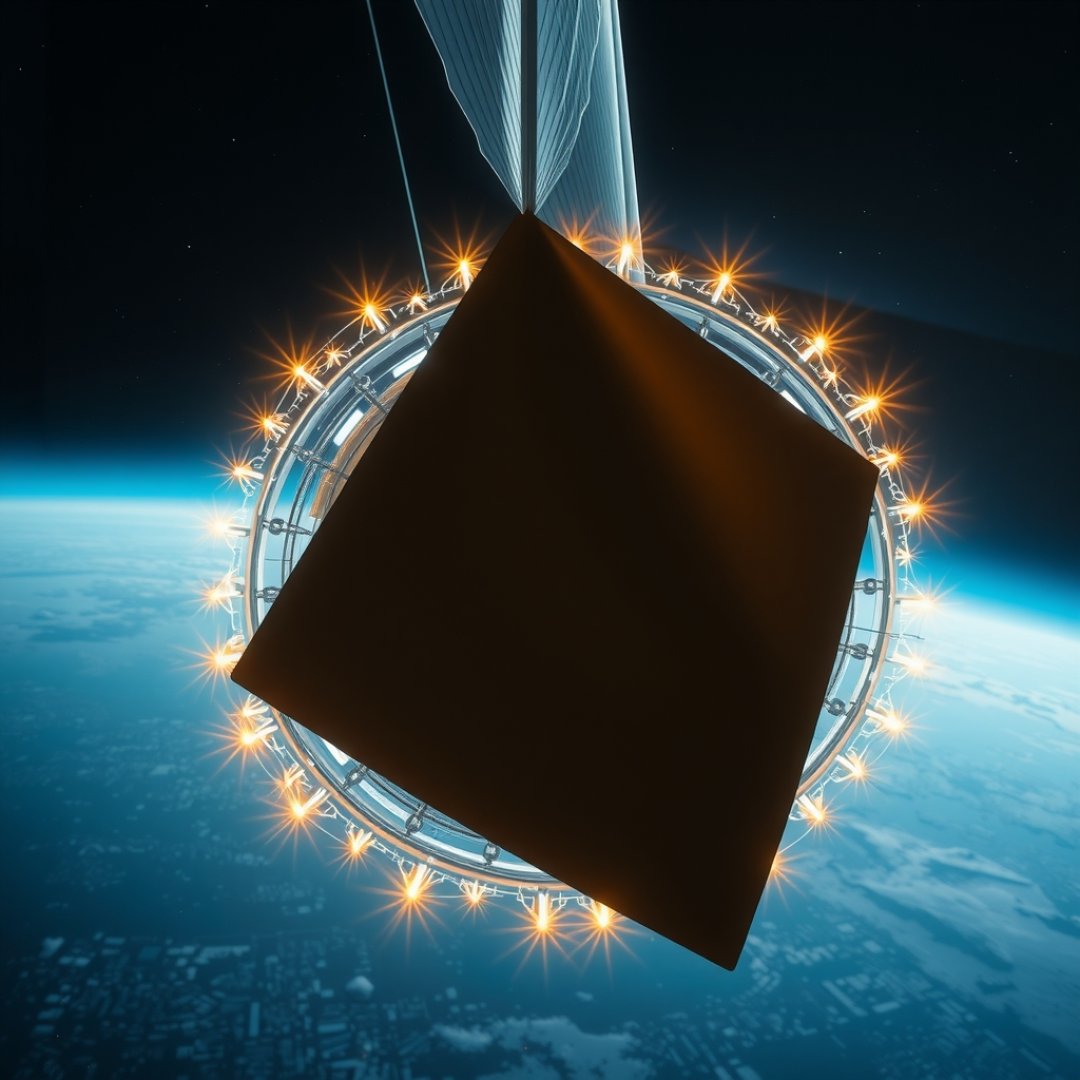
The prospect of traveling beyond our solar system has long been confined to the realm of science fiction, yet the development of the Cornell Lightsail Interstellar propulsion capability is bringing this ambition closer to reality. By utilizing high-intensity laser arrays to push ultra-thin sails through the vacuum of space, researchers are exploring how photon pressure can accelerate spacecraft to a significant fraction of the speed of light. Unlike traditional chemical rockets that are severely limited by fuel mass and exhaust velocity, this innovative approach leverages the momentum of light itself, potentially reducing travel time to neighboring star systems from thousands of years to just a few decades. This paradigm shift in space propulsion represents a vital step forward in human exploration, providing a viable pathway for conducting scientific surveys of exoplanets that were previously considered unreachable, and ultimately reshaping our understanding of deep space transit mechanics.
The Physics of Photon Pressure
Harnessing Light for Velocity
At the core of the Cornell Lightsail Interstellar concept lies the principle of radiation pressure. Photons, though massless, carry momentum. When these particles strike a highly reflective surface, they impart a small force upon it. While negligible on a macro scale, continuous exposure to a coherent laser beam focused on a massive scale can generate consistent acceleration.
Technical Challenges
- Sail Material Science: Creating materials that are incredibly thin yet thermally resistant to intense laser light.
- Beam Collimation: Maintaining a coherent laser beam over millions of kilometers to strike the sail accurately.
- Payload Miniaturization: Ensuring all scientific instruments are small and lightweight enough to reach relativistic speeds.
Strategic Advantages of Light-Based Propulsion
Overcoming the Tyranny of the Rocket Equation
Traditional space travel is plagued by the rocket equation, which requires massive amounts of propellant to gain velocity. Because the propellant itself adds mass, the system becomes exponentially inefficient. The Cornell approach bypasses this by placing the energy source at the origin, effectively leaving the fuel on Earth.
Mission Scalability
By shifting the propulsion hardware to a ground-based or orbit-based laser station, the spacecraft itself remains light and agile. This enables the potential for swarm missions, where hundreds of tiny probes are sent simultaneously to perform multi-point analysis of interstellar environments.
Future Implications for Interstellar Exploration
Connecting with Neighboring Star Systems
The primary goal for this technology is reaching Proxima Centauri and similar nearby systems. With current chemical technology, travel to these destinations would take tens of thousands of years. With light-sail technology, researchers aim to achieve speeds of roughly 20% the speed of light, making missions viable within a single human generation.
Scientific Discoveries
Successful interstellar transit would allow for the direct observation of exoplanetary atmospheres, searching for signs of biosignatures that cannot be detected by current deep-space telescopes. This technology could fundamentally prove whether or not we are alone in the universe.
Frequently Asked Questions
What is the primary power source for the Cornell Lightsail?
The system utilizes a powerful ground-based or orbital laser array that projects a focused beam of light onto the sail to provide thrust.
How fast can an interstellar lightsail travel?
Theoretical models suggest that these spacecraft could achieve speeds up to 20% of the speed of light, drastically cutting transit times.
Is this technology currently in use?
The concept is in the research and development phase, with scientists currently focusing on material durability and precision laser targeting.