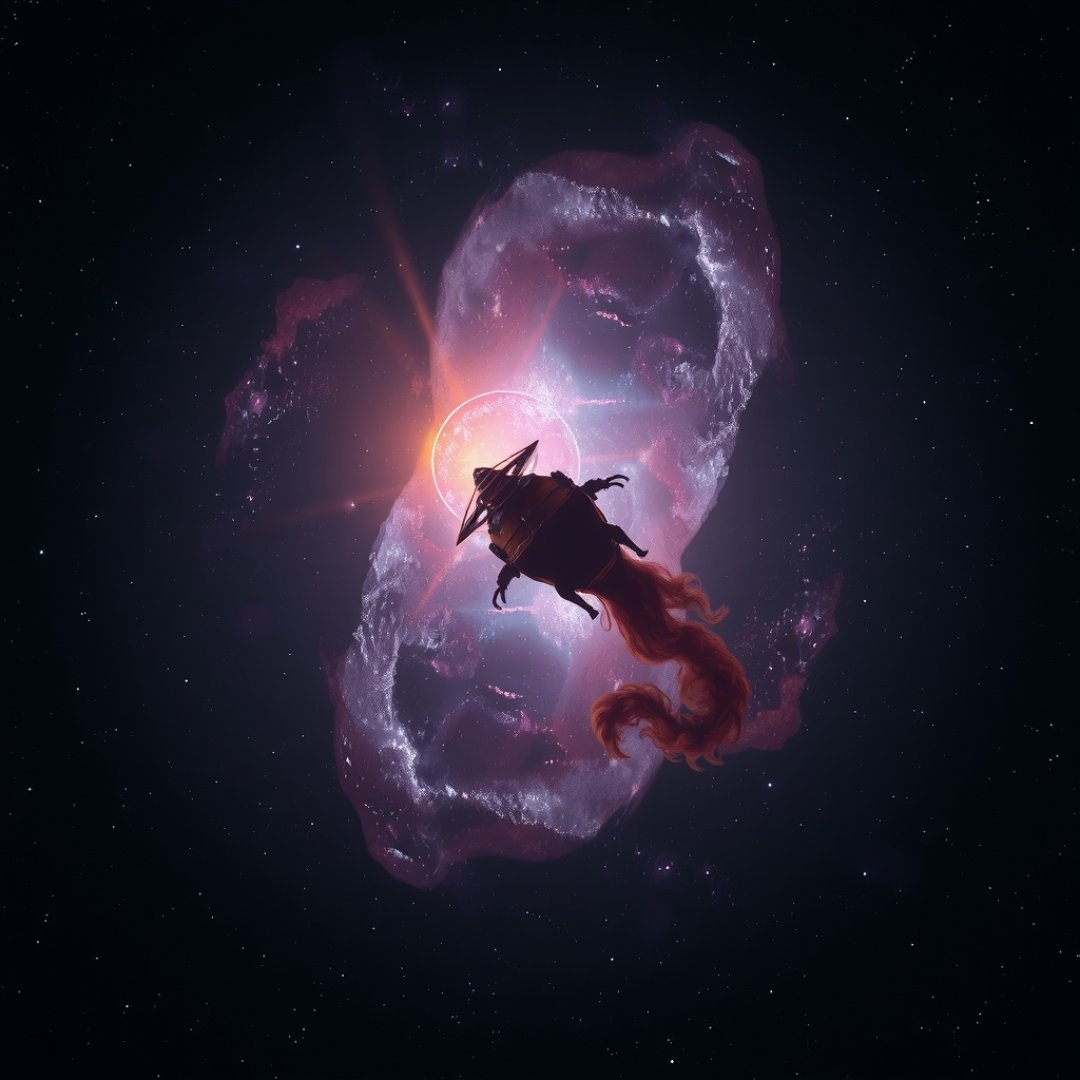
The Witch Head Nebula, cataloged by astronomers as IC 2118, represents one of the most visually striking examples of a reflection nebula within our galactic neighborhood. Located roughly 900 light-years from Earth in the constellation Eridanus, this ethereal cloud of dust and gas acts as a celestial mirror. The Witch Head Nebula electromagnetic radiation properties are primarily defined by how the fine interstellar dust grains scatter short-wavelength blue light from the supergiant star Rigel. Because these particles are far more efficient at scattering blue light than red light, the nebula adopts its characteristic indigo hue, providing researchers with a unique opportunity to study the interaction between high-energy starlight and diffuse interstellar medium components. Understanding these radiative processes allows scientists to map the distribution of matter in the Orion molecular cloud complex, shedding light on the structural evolution of star-forming regions and the complex interplay of light and shadow across the interstellar void.
Physics of Reflection Nebulae
Scattering Mechanisms
Unlike emission nebulae that glow through the ionization of gas by intense ultraviolet radiation, the Witch Head Nebula is a reflection nebula. It shines by reflecting the light of nearby, luminous stars. The intensity and color of the light reaching observers depend heavily on the size and chemical composition of the dust particles present in the cloud.
The Role of Interstellar Dust
The dust grains in IC 2118 are largely composed of carbon and silicate compounds. These grains effectively disperse incoming photons. Mie scattering is the primary physical process at work, where the size of the particles is comparable to the wavelength of the light being scattered, resulting in the distinct blue appearance that dominates the nebula’s spectrum.
Interaction with the Star Rigel
Proximity and Illumination
The nebula is situated in close proximity to Rigel, the brightest star in the constellation Orion. Rigel’s immense luminosity and blue spectral classification provide the perfect source for illuminating the dust clouds of the Witch Head. The spatial orientation of the nebula relative to Rigel determines the specific geometry of the scattered light detected by modern observatories.
Studying Spectral Variations
- Wavelength Dependence: Analysis of the electromagnetic output reveals a higher concentration of blue light, which is scattered more effectively by small particles.
- Density Mapping: By measuring the brightness of the nebula, astronomers can infer the density and distribution of the gas clouds.
- Galactic Mapping: This nebula serves as a key marker for understanding the movement and history of the Orion molecular cloud.
Observational Significance in Modern Astronomy
Advancements in Infrared Mapping
While the visual appearance is dominated by blue scattered light, the Witch Head Nebula is also an active region for infrared observations. Infrared detectors on space telescopes allow researchers to peer through the thick dust to observe the heat signature of the matter within. This provides a more comprehensive view of the nebula’s physical structure, showing how it is shaped by both radiation pressure and galactic winds.
Contribution to Star Formation Theories
Studying this nebula is vital for theoretical models regarding the lifecycle of stars. It acts as a laboratory for observing how interstellar dust influences the cooling and collapse of gas clouds, a process that is fundamental to the birth of new stellar systems throughout the Milky Way.
Frequently Asked Questions
Why is the Witch Head Nebula blue?
The nebula appears blue because its fine interstellar dust grains are highly efficient at scattering the blue light emitted by the nearby star Rigel, a process known as Rayleigh or Mie scattering.
How far is the Witch Head Nebula from Earth?
The Witch Head Nebula is located approximately 900 light-years away from Earth in the constellation Eridanus.
Is the Witch Head Nebula a star-forming region?
While it is part of the larger Orion molecular cloud complex where star formation is common, the Witch Head Nebula itself is primarily recognized as a reflection nebula that is currently being illuminated by the star Rigel.