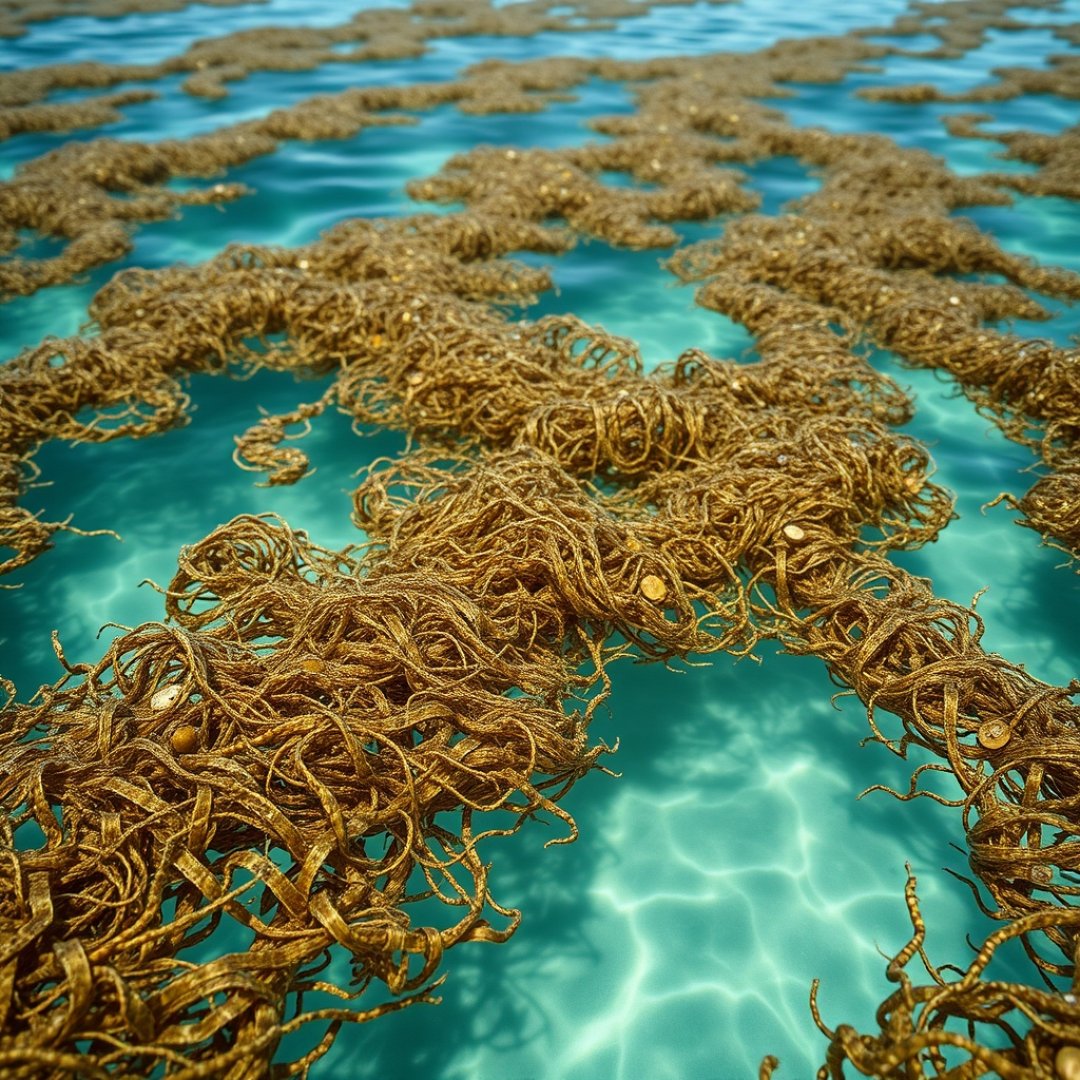
The Sargassum belt represents one of the most significant botanical phenomena currently unfolding within the Atlantic Ocean, stretching thousands of kilometers from the coast of West Africa to the Gulf of Mexico. This colossal accumulation of brown macroalgae, known scientifically as Sargassum, creates a floating habitat that serves as both a vital nursery for marine life and a source of environmental disruption when it washes ashore. Scientists monitoring the Sargassum belt are identifying complex triggers related to nutrient runoff, warming sea temperatures, and shifting ocean currents that fuel its unprecedented growth. As this floating biomass travels across the open ocean, it dramatically alters the local water chemistry, creates unique biological niches, and presents ongoing challenges for coastal ecosystems that must grapple with the sheer volume of decomposing material reaching their shores annually.
The Origin and Formation of the Great Atlantic Sargassum Belt
Nutrient Enrichment and Ocean Warming
The transition of Sargassum from a minor open-ocean component to a massive, consolidated Sargassum belt is driven by a convergence of human and environmental factors. Increased nutrient loading—specifically nitrogen and phosphorus—from major river systems like the Amazon and Congo contributes to the rapid proliferation of this algae. As these nutrient-rich waters enter the Atlantic, they act as a biological catalyst for rapid biomass production.
The Role of Oceanographic Currents
Beyond nutrient availability, prevailing wind patterns and ocean circulation models play a critical role in confining the seaweed into a coherent belt. By analyzing satellite imagery, researchers have mapped how seasonal current shifts effectively trap the biomass, preventing it from dispersing and instead allowing it to accumulate into the vast, dense mats observed today.
Ecological Consequences in the Open Ocean
Biodiversity and Habitat Creation
While often viewed through the lens of coastal nuisance, the Sargassum belt provides an essential service as an open-ocean habitat. It serves as a floating nursery for diverse marine organisms, including:
- Juvenile sea turtles seeking refuge from predators.
- Endemic species such as the sargassum frogfish.
- Various commercially important fish larvae that rely on the mats for shade and feeding.
Impact on Water Chemistry
The presence of such dense vegetation can influence oxygen saturation levels. While the algae produces oxygen via photosynthesis, massive accumulations can eventually block sunlight from reaching deeper water layers, potentially disrupting the local food chain if the density becomes too high for typical marine productivity.
Coastal Challenges and Environmental Management
The Decomposition Process
When the Sargassum belt eventually encounters a coastline, it undergoes a rapid process of decay. This decomposition releases hydrogen sulfide and ammonia, gases that can significantly degrade air quality and create hazardous conditions for local marine life in shallow lagoons. Managing these massive arrivals requires specialized equipment and significant municipal resources.
Future Outlook and Research
Ongoing research focuses on predicting the arrival of these mats using satellite remote sensing. By identifying the triggers for large-scale blooms, scientists hope to develop early warning systems that help coastal communities prepare for the ecological and economic realities of these recurring seasonal events.
Frequently Asked Questions
What is the Sargassum belt?
It is a massive, multi-thousand-kilometer-long accumulation of brown seaweed floating in the Atlantic Ocean that grows and consolidates based on nutrient levels and temperature.
Why does the seaweed wash up on beaches?
Seasonal ocean currents and wind shifts push the floating mats toward coastal regions, where they deposit massive amounts of biomass that decompose on the shoreline.
Is the Sargassum belt harmful to marine life?
It is complex; while it provides a critical habitat and nursery for many species, excessive amounts can block sunlight and deplete oxygen as it decays, potentially harming local ecosystems.