Skip to content
  • About Cosmica

Search Site

The universe, explained.

Category: Astronomy and Science

Home » Astronomy and Science » Page 3
Astronomy and Science
October 8, 2026

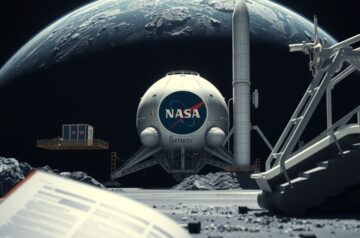
Artemis II Mission Lunar Orbit Photography Objectives Explained

The upcoming Artemis II mission represents a monumental leap in human spaceflight, marking the first time in over five decades that astronauts will venture into deep space to orbit the Moon. While the primary mission goals involve rigorous systems testing and human physiological monitoring, the Artemis II mission also...

Continue reading
Astronomy and Science
October 7, 2026

Pa 30 Remnant Explosive Origin Analysis: Unveiling a Rare Cosmic Event

The study of the Pa 30 remnant explosive origin analysis provides astronomers with a rare window into the chaotic final moments of specific stellar deaths. Located within the Milky Way, this fascinating structure is associated with the historical transient event known as SN 1181. For decades, researchers have been...

Continue reading
Astronomy and Science
October 6, 2026

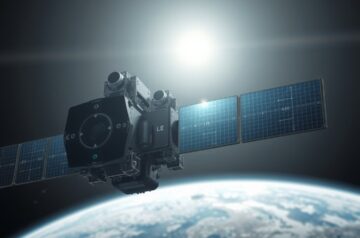
SMILE Satellite Auroral Monitoring Mission Scope and Objectives

The Solar wind Magnetosphere Ionosphere Link Explorer, better known as the SMILE satellite, represents a groundbreaking collaborative effort between the European Space Agency and the Chinese Academy of Sciences. As we push the boundaries of heliophysics, understanding the complex, dynamic relationship between our planet and the sun has become...

Continue reading
Astronomy and Science
October 4, 2026

Antarctic Ice Sheet Climate Sensitivity and Global Sea Level Impacts

The Antarctic ice sheet serves as the planet’s largest freshwater reservoir, playing a foundational role in regulating Earth’s thermal balance. As global temperatures climb, the stability of these massive frozen expanses faces unprecedented scrutiny from the scientific community. Understanding the Antarctic ice sheet climate sensitivity is critical because even...

Continue reading
Astronomy and Science
October 2, 2026

PRIMA Infrared Telescope Scientific Observation Potential

The PRIMA Infrared Telescope scientific observation potential represents a significant leap forward in our ability to probe the obscured regions of the universe. By targeting the far-infrared spectrum, this mission is engineered to penetrate dense clouds of interstellar dust that effectively block the view of traditional optical instruments. Scientists...

Continue reading
Astronomy and Science
October 1, 2026

Mount Etna Volcanic Eruption Geological Mechanics Explained

Mount Etna is not merely a prominent landmark in Sicily; it is one of the most active volcanoes on Earth, offering a unique laboratory for geologists to study the complex Mount Etna volcanic eruption geological mechanics. Located at the intersection of the African and Eurasian tectonic plates, this massive...

Continue reading
Astronomy and Science
September 30, 2026

LHS 1140b Atmospheric Composition Observation Potential and Habitability

Located approximately 48 light-years from Earth, the exoplanet LHS 1140b has emerged as a premier target for modern astrobiology. Unlike many other M-dwarf planets that suffer from intense stellar radiation, this super-Earth resides in the conservative habitable zone of its host star. Recent data from the James Webb Space...

Continue reading
Astronomy and Science
September 29, 2026

Cornell Lightsail Interstellar Propulsion Capability: Reaching the Stars

The prospect of traveling beyond our solar system has long been confined to the realm of science fiction, yet the development of the Cornell Lightsail Interstellar propulsion capability is bringing this ambition closer to reality. By utilizing high-intensity laser arrays to push ultra-thin sails through the vacuum of space,...

Continue reading
Astronomy and Science
September 28, 2026

Volcanic Crystals Magma Transport Indicator Analysis: Decoding Eruption Forensics

Volcanoes are dynamic systems, and the geological record held within igneous rocks offers a unique glimpse into the chaotic plumbing beneath the surface. By performing a detailed volcanic crystals magma transport indicator analysis, researchers can effectively reconstruct the thermal and chemical history of molten rock as it ascends through...

Continue reading
Astronomy and Science
September 27, 2026

Chariklo Ring System Structural Evolution Mechanics Explained

The discovery of the Chariklo ring system fundamentally altered our understanding of planetary science, proving that complex, narrow ring structures are not exclusive to the giant gas planets of our outer solar system. As a Centaur orbiting between Saturn and Uranus, 10199 Chariklo represents a unique laboratory for studying...

Continue reading

Posts navigation

Older posts→
←Newer posts
2026 © The universe, explained.Privacy PolicyTheme by SiteOrigin